You Won’t Believe What I Found While Wandering New York’s Cultural Corners
New York isn’t just skyscrapers and subways—it’s a living museum of culture hiding in plain sight. I wandered without a map and stumbled upon street art that spoke volumes, jazz tucked inside unmarked doors, and dance rhythms pouring from community halls. What makes this city truly electric isn’t the spotlight attractions, but the raw, real moments between them. If you’ve only seen the guidebook version, you’ve missed the soul. Let me take you where the culture pulses loudest. This is not a city of static monuments, but of constant creation—where every neighborhood breathes its own history, music, and flavor. For the curious traveler, especially those seeking meaningful, authentic experiences, New York offers a deeper kind of journey: one guided not by itineraries, but by intuition and openness.
The Pulse of the City: Why Cultural Wandering Beats Sightseeing
Cultural wandering is not tourism with a checklist. It is the art of being present—of stepping off the subway at an unfamiliar stop, following the scent of spices down a side street, or pausing when a burst of music spills from an open window. Unlike traditional sightseeing, which often prioritizes efficiency and visibility, cultural wandering values discovery, connection, and sensory immersion. It is about engaging with the city as locals do, not as visitors passing through. In New York, this approach is especially rewarding. The city’s unmatched diversity—more than 200 languages spoken, representing communities from nearly every nation—fuels a continuous, organic exchange of traditions, cuisines, and creative expressions.
The numbers reflect this richness. According to the New York City Department of Cultural Affairs, there are over 5,000 nonprofit arts and cultural organizations operating across the five boroughs. These range from world-renowned institutions to neighborhood-based collectives rehearsing in church basements. Each represents a thread in the city’s cultural fabric. But statistics only tell part of the story. The real magic lies in lived experience: the sound of a West African drum circle in Fort Greene Park on a Sunday afternoon, the sight of elderly women in saris sharing tea outside a Queens grocery, or the smell of cumin and coriander roasting in a Jackson Heights kitchen that doubles as a community cooking school. These are not staged performances. They are everyday moments, alive and unscripted.
What makes cultural wandering so powerful is its ability to foster genuine connection. When you slow down and observe, you begin to notice patterns—the way a bodega owner knows every customer by name, or how a block party in the Bronx can transform a quiet street into a celebration of music and food. These experiences create emotional resonance, a sense of belonging even if you’re just passing through. For women in their 30s to 50s, many of whom balance family, work, and personal interests, such moments offer a rare kind of fulfillment: not just relaxation, but enrichment. They remind us that travel can be more than escape—it can be transformation.
Harlem’s Jazz Legacy: More Than a Nightlife Scene
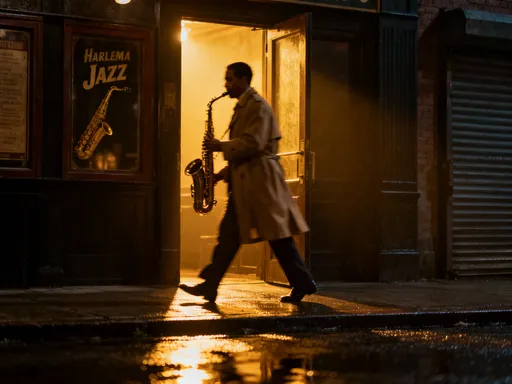
No neighborhood in New York embodies cultural depth quite like Harlem. For over a century, this historic community has been a cradle of African American art, literature, and music. Its streets echo with the legacy of the Harlem Renaissance, a movement that redefined American culture in the early 20th century. Today, that spirit lives on most vividly in its jazz scene. To step into a Harlem jazz club is to enter a living archive of improvisation, rhythm, and soul. These are not tourist traps with canned performances, but intimate spaces where music is created in real time, shaped by the mood of the room and the energy of the audience.
One evening, I found myself at a small, unmarked venue on Lenox Avenue. There was no sign, just a dimly lit staircase leading underground. Inside, a quartet played with a quiet intensity that held the room in rapt attention. The saxophonist closed his eyes between phrases, as if listening to something beyond sound. This is the heart of Harlem jazz: spontaneous, emotional, and deeply human. The music here is not background noise—it is conversation, memory, protest, and celebration all at once. For visitors, the experience is both humbling and exhilarating, a reminder of how art can connect people across generations and backgrounds.
For those planning a visit, timing and preparation matter. Most historic clubs, such as Minton’s Playhouse or Ginny’s Supper Club, offer live music Thursday through Sunday, with peak nights on weekends. Reservations are recommended, especially for dinner sets, as seating is limited. Dress codes vary—some venues encourage smart casual, while others are more relaxed. But above all, come with respect. These spaces are part of a cultural tradition that deserves honor, not just observation. One highlight not to miss is Amateur Night at the Apollo Theater, a legendary institution that has launched the careers of icons from Ella Fitzgerald to Lauryn Hill. Held every Wednesday, it invites performers of all levels to take the stage, often resulting in unforgettable moments of raw talent and community support.
Street Art as Storytelling: The Murals of Bushwick
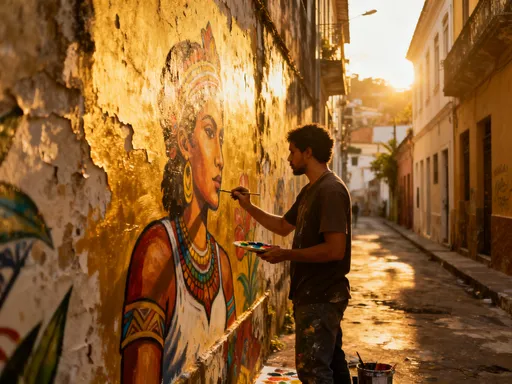
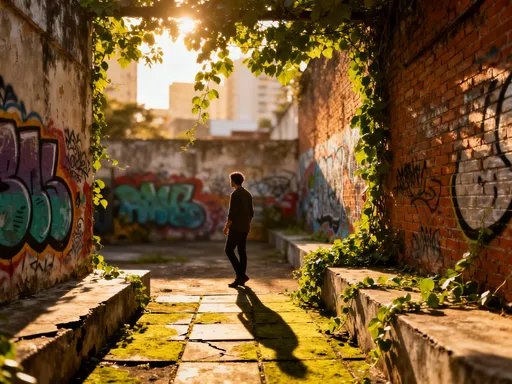
If Harlem speaks through music, Bushwick in Brooklyn tells its story through color. Once an industrial neighborhood, Bushwick has become one of the world’s most vibrant open-air galleries. What began as graffiti on abandoned buildings has evolved into a curated yet organic movement of large-scale murals. Artists from around the globe come here to paint, drawn by the neighborhood’s creative energy and the opportunity to create public art without commercial constraints. The result is a constantly changing landscape of visual narratives—some political, some personal, all deeply expressive.
Walking through the streets between Wyckoff and Flushing Avenues feels like moving through a living exhibition. One wall might depict a towering portrait of a local elder, her eyes filled with quiet strength. Another shows a surreal dreamscape of floating animals, a commentary on environmental change. Still another uses bold geometric patterns inspired by Afro-Caribbean design. These murals are more than decoration. They reflect the identity of a community in transition—resilient, diverse, and unafraid to speak its truth. For women who appreciate creativity and self-expression, the art of Bushwick offers both inspiration and insight into the power of public voice.
To fully experience the murals, consider a guided bike tour or a self-guided walk using a mapped route from the Bushwick Collective, the nonprofit that has helped organize and promote the area’s art scene. Early morning or late afternoon light enhances the colors and reduces crowds. Be mindful, however, that this is a residential neighborhood. Visitors should respect private property, avoid blocking driveways, and refrain from touching the artwork. Also, remember that street art is inherently temporary. A mural you admire today may be painted over next month, replaced by a new message. This impermanence is part of its beauty—a reminder that culture, like life, is always in motion.
Chinatown & Beyond: Festival Rhythms Across Boroughs
New York’s cultural calendar is marked by celebrations that transform streets into stages of heritage and joy. Among the most vibrant are the festivals of the Chinese American community, particularly Lunar New Year and the Dragon Boat Festival. These events are not confined to Manhattan’s Chinatown alone—they ripple across boroughs, with major gatherings in Flushing, Queens, and Sunset Park, Brooklyn. Each celebration is a sensory feast: the crackle of firecrackers meant to ward off evil spirits, the swirling motion of lion dancers in elaborate costumes, and the irresistible aroma of dumplings, bao, and roasted duck from street vendors.
Lunar New Year, typically falling in January or February, is especially significant. In Manhattan, the festivities center around Mott and Canal Streets, where parades draw thousands. The dragon dance—a long, undulating puppet manipulated by a team of dancers—is a highlight, symbolizing power, wisdom, and good fortune. Families gather to watch, children clutch red envelopes, and elders smile at traditions passed down through generations. In Flushing, the celebrations are equally spirited, with community centers hosting calligraphy workshops, tea ceremonies, and children’s performances. These events are not just for Chinese Americans. They are open, inclusive, and designed to share culture with all who come with respect and curiosity.
The Dragon Boat Festival, held in June, honors ancient traditions with modern energy. In Flushing Meadows–Corona Park, teams paddle in long, narrow boats to the beat of drums, competing in races that date back over 2,000 years. Spectators line the shores, cheering and sampling festival foods. The event commemorates the poet Qu Yuan and emphasizes themes of loyalty, sacrifice, and community. For visitors, it offers a rare chance to witness a centuries-old ritual performed with enthusiasm and pride. Both festivals follow the lunar calendar, so dates vary each year. Checking the official NYC Parks or Chinatown Partnership websites in advance ensures you won’t miss the peak days. These are not just photo opportunities—they are moments of cultural continuity, where the past is kept alive through public participation.
Offstage Magic: Behind-the-Scenes of NYC’s Performing Arts
Beyond Broadway’s bright lights, New York’s performing arts thrive in smaller, more intimate spaces. In neighborhoods like the Lower East Side, Williamsburg, and Harlem, independent theater companies, dance troupes, and spoken word collectives rehearse and perform with passion and innovation. These groups often work with limited budgets but boundless creativity, producing work that is experimental, socially relevant, and deeply personal. To attend one of their performances is to witness art in its most immediate form—unfiltered, unpolished, and profoundly moving.
I once attended a rehearsal for a new play in a converted warehouse on Clinton Street. The cast, a diverse group of women and men in their 30s and 40s, ran lines in a bare space with folding chairs and a single overhead light. The play explored themes of motherhood, migration, and identity—issues that resonated deeply with the audience during a post-rehearsal talkback. This kind of interaction is common in off-off-Broadway theater, where the boundary between performer and spectator is often porous. Venues like The Bushwick Starr, PS122, or the Flea Theater specialize in this kind of work, offering audiences a chance to see stories that mainstream theater might overlook.
For those interested in attending, platforms like TodayTix, OvationTix, and Show-Score provide access to last-minute tickets, often at affordable prices. Many shows offer pay-what-you-can nights or rush tickets. Seating is usually limited—some spaces hold fewer than 100 people—so intimacy is guaranteed. These performances are not about spectacle. They are about connection, reflection, and the courage to speak truth through art. For women who value storytelling and emotional depth, these experiences can be especially meaningful. They remind us that powerful narratives come not only from famous playwrights but from everyday people with stories to tell.
Museums with a Twist: Where Tradition Meets Innovation
New York’s museums are more than repositories of art and history—they are dynamic spaces where the past dialogues with the present. While institutions like the Metropolitan Museum of Art draw millions with their grand collections, smaller museums offer equally profound, often more personal experiences. The Museum of the City of New York, located in Manhattan’s Museum Mile, stands out for its rotating exhibits that explore the city’s evolving identity. One recent display examined the role of women in shaping New York’s civic life, from suffragists to modern-day activists. Another focused on the history of public housing, using photographs, oral histories, and architectural models to tell stories often overlooked.
Equally compelling is the Tenement Museum on the Lower East Side. Housed in a restored 19th-century apartment building, it offers guided tours that bring to life the experiences of immigrant families who lived there. Visitors walk through cramped apartments, hear personal stories, and see recreated domestic scenes based on historical records. The museum does not romanticize the past. Instead, it presents a nuanced portrait of struggle, resilience, and hope—themes that resonate across generations. For women who have navigated change, built new lives, or raised families in unfamiliar environments, these stories can feel deeply familiar.
Planning a museum visit with cultural depth in mind requires some strategy. Many institutions offer free or pay-what-you-wish admission on certain days—The Met on Fridays for New York residents, the Museum of the City of New York on Wednesday afternoons. Audio guides can enhance understanding, especially for exhibits rich in historical context. Family-friendly programs, such as storytelling sessions or craft workshops, make these spaces welcoming for multigenerational visits. Accessibility has also improved, with most major museums offering wheelchair access, sensory-friendly hours, and multilingual materials. These museums do not just display culture—they invite participation, reflection, and connection.
Wanderer’s Toolkit: How to Find Culture Without a Plan
The beauty of cultural wandering lies in its spontaneity, but a few simple tools can help you find these moments more easily. Start by consulting local event calendars. Time Out New York, NYC-ARTS, and the official NYC.gov website list hundreds of free and low-cost events each week—from poetry readings in Brooklyn libraries to folk dance workshops in the Bronx. These are not mass-marketed attractions but community-driven gatherings, often under the radar of typical tourism.
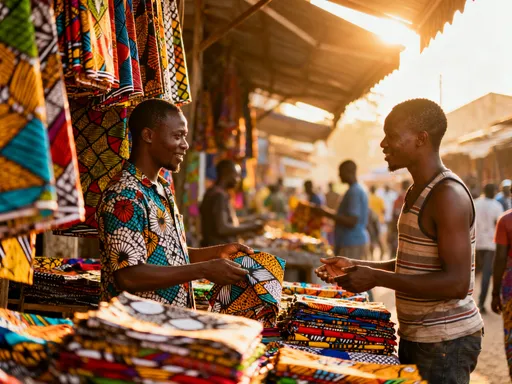
Another powerful tool is conversation. Talk to shop owners, baristas, or librarians. Ask, “What’s happening in the neighborhood this weekend?” or “Where do locals go for music or art?” You’ll often receive personal recommendations that no app can provide. Riding less popular subway lines can also lead to discovery. The G train through Brooklyn, the Z through Jamaica, or the 1 through the West Bronx take you through areas rarely seen by tourists but rich in cultural life. Get off at random stops and explore. You might find a Haitian bakery, a Puerto Rican cultural center, or a West African fabric store.
Safety and etiquette matter. Always be respectful when attending community events. Dress appropriately, avoid intrusive photography, and follow local customs. If an event is labeled “private” or “by invitation,” do not enter. But when participation is welcome, engage with openness and humility. Finally, practice slow travel. Instead of rushing to three neighborhoods in a day, spend half a day in one. Sit in a park, visit a local market, have coffee at a neighborhood café. Let the rhythm of the place reveal itself. These moments of stillness often lead to the most meaningful discoveries.
Wandering New York with cultural curiosity opens doors no tour bus can reach. It’s not about ticking off landmarks, but about letting the city speak to you—in a salsa beat on a fire escape, in a mural’s bold colors, in the hush of a centuries-old ritual reborn. The real New York lives in these moments. So step off the beaten path, trust your instincts, and let the culture guide your way. You might just find the city you never knew was there. And in that discovery, you may also find a deeper connection to the world—and to yourself.