Helsinki’s Hidden Flavors: A Local Food Journey You’ve Never Tasted
You know that feeling when you travel, not just to see, but to taste the soul of a place? Helsinki hit me like a fresh rye crisp—unexpected, rich, and deeply satisfying. Forget clichés; this isn’t just salmon and meatballs. I dug into the city’s culinary heartbeat, from bustling market halls to quiet coastal huts, discovering how Finnish seasons, silence, and simplicity shape food that speaks volumes. This is a city where the sea breathes into every bite, where forests offer hidden treasures, and where tradition is not preserved behind glass but lived daily on dinner tables and café counters. Helsinki’s cuisine is a quiet revolution—unshowy, deeply rooted, and profoundly honest.
The Soul of Helsinki on a Plate
Finnish cuisine, especially as experienced in Helsinki, is a study in restraint and resonance. It does not shout; it whispers. Its flavors emerge not from complexity, but from clarity—each ingredient allowed to speak in its purest form. At the heart of this culinary philosophy lies a deep respect for nature’s cycles and the country’s northern geography. Helsinki, perched on the edge of the Baltic Sea and cradled by boreal forests, draws its nourishment directly from these environments. The city’s food culture is shaped by long winters, short but intense summers, and a historical reliance on preservation, foraging, and self-sufficiency.
What defines authentic Helsinki flavors is not extravagance, but intention. Locals speak of ruokakulttuuri—food culture—not as a trend, but as a lived rhythm. Meals follow the seasons: bright, tart cloudberries in late summer; smoked fish pulled from cold waters in autumn; pickled vegetables and hearty stews sustaining through winter’s hush. The influence of both Eastern and Western culinary traditions is evident. Centuries of contact with Sweden brought dairy-rich dishes and open-faced sandwiches, while proximity to Russia introduced rye breads, pierogi-like pastries, and preserved vegetables. Yet Helsinki has forged its own identity—neither purely Nordic nor Eastern European, but a thoughtful blend that honors both.
Ingredients are treated with reverence. Reindeer, though more common in Lapland, appears in Helsinki kitchens as tender slices pan-seared with lingonberry sauce, a balance of earthy and tart. Fresh Baltic herring is celebrated in multiple forms—marinated, smoked, or fried—often served simply with boiled potatoes and dill. Cloudberries, golden and fragile, are considered a northern treasure, their delicate flavor enhanced with a touch of sugar or folded into creamy desserts. These are not exotic novelties; they are staples, woven into the fabric of daily eating.
Modern Helsinki has embraced the global wave of New Nordic cuisine, but with a distinct local character. Unlike more theatrical interpretations elsewhere, Helsinki’s fine dining leans toward quiet precision. Chefs emphasize hyper-local sourcing, fermentation, and minimal waste. A meal might begin with pickled beets and house-made goat cheese, progress to a main of perch from Lake Päijänne with wild herbs, and conclude with a juniper-infused dessert. The innovation is not in spectacle, but in depth—drawing out the essence of what the land and sea already provide.
Market Square & the Old Market Hall: Where Locals Eat
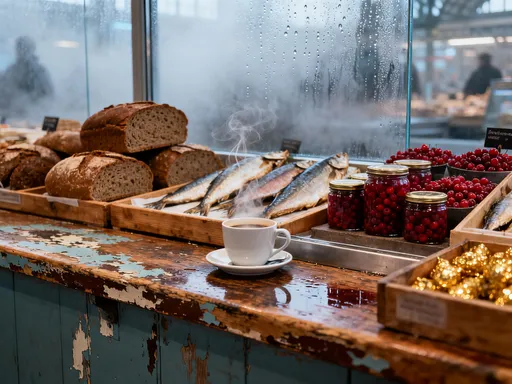
No introduction to Helsinki’s food culture is complete without a visit to its beating heart: the Market Square and the adjacent Vanha Kauppahalli, or Old Market Hall. These are not tourist attractions dressed up as local experiences—they are where Helsinki residents shop, eat, and connect. Every morning, especially in summer, the open-air stalls of Market Square come alive with fishermen laying out glistening herring, farmers arranging baskets of new potatoes, and bakers offering warm loaves of rye. The air carries the briny scent of the sea, the sweetness of ripe berries, and the comforting aroma of grilled sausages.
The grilled Baltic herring stand is a must-visit. Served on paper trays with a wedge of lemon, a dollop of mustard-dill sauce, and a slice of dark rye bread, it’s a meal that costs little but satisfies deeply. Vendors often recommend pairing it with a glass of cold milk or a locally brewed lager. Smoked cheeses from small dairies in southern Finland appear in golden wheels, their smokiness balanced by a creamy texture. Look for varieties made with cow’s milk infused with juniper or caraway—subtle flavors that reflect the forest.
Inside the Vanha Kauppahalli, the atmosphere shifts from bustling to intimate. Opened in 1889, this historic hall houses dozens of small vendors, each with its own specialty. One stall might offer hand-rolled salmon gravlax with dill and sugar, another homemade lingonberry jam sweetened only with fruit and a touch of honey. There’s a bakery corner where elderly women queue for pulla, the soft, cardamom-scented sweet bread that is a cornerstone of Finnish breakfasts and coffee breaks. Another vendor sells reindeer salami, thinly sliced and served with pickled cucumbers—a savory, slightly gamey delight.
To navigate these spaces like a local, timing is key. Arrive early on a weekday morning to avoid crowds and ensure freshness. Saturdays are lively but packed with tourists, so weekdays offer a more authentic rhythm. Don’t hesitate to ask questions—most vendors speak excellent English and are proud to explain their products. Pointing and smiling works too; Finns appreciate sincerity over perfection. And while it’s tempting to sample everything, focus on seasonal offerings. In June and July, look for fresh silakka (Baltic sprats); in August, wild mushrooms like chanterelles appear; by September, smoked eel and root vegetables take center stage.
These markets are more than places to eat—they are living archives of Helsinki’s food memory. They reflect a culture that values quality over quantity, tradition over trend, and connection over convenience. To eat here is to participate in a daily ritual that has sustained families for generations.
Beyond the Tourist Map: Neighborhood Eateries with Character
While the city center draws visitors, the true soul of Helsinki’s food scene lives in its neighborhoods. Punavuori, Kallio, and Töölö are home to unassuming cafés, family-run bakeries, and lunch counters where residents gather without fanfare. These are not Instagram-bait destinations but quiet sanctuaries of flavor and familiarity. In Punavuori, a district known for its design shops and art galleries, a small café might serve karjalanpiirakka—Karelian pasties made from rye crust and filled with creamy rice porridge, topped with egg butter. They are humble, warming, and deeply Finnish.
Another neighborhood favorite is lörtsy, a Finnish meat pie with roots in western Finland. In Kallio, a working-class district with a strong sense of community, a local bakery might offer lörtsy filled with minced meat, onions, and spices, baked until golden. It’s the kind of food eaten quickly at lunch, wrapped in paper, perhaps with a thermos of coffee. There’s no pretense—just sustenance made with care. These pies are often found in pihkauppa (corner shops) or small delis, places where regulars are greeted by name.
Töölö, quieter and more residential, has its own rhythm. A family-owned bakery there might open at dawn to bake pulla, the sweet cardamom bread that appears at nearly every Finnish gathering. On Saturdays, it’s common to see parents buying a loaf to go with coffee while children play in the nearby park. The scent of cardamom and yeast lingers in the air, a comforting reminder of home. Some bakeries also offer munkki, a Finnish doughnut dusted with sugar, often enjoyed at outdoor events or seaside saunas.
These neighborhood spots thrive on consistency. They don’t reinvent the wheel—they perfect it. A café in Kallio might serve the same open-faced salmon sandwich for twenty years, using the same sourdough, the same dill, the same soft-boiled egg. Regulars return not for novelty, but for reliability. The atmosphere is warm but unobtrusive; Finns value quiet companionship over loud interaction. You won’t hear music blaring or servers making small talk. Instead, there’s a shared understanding—a respect for space, for slowness, for the simple act of eating well.
For visitors, the challenge is not finding these places, but recognizing them. They rarely have flashy signs or online reviews. The best way to discover them is to walk, observe, and follow the locals. If you see a queue of people in practical coats holding reusable bags, you’re likely near something genuine. These are the places where Helsinki’s food culture breathes most freely—unpolished, unpretentious, and utterly real.
Modern Helsinki: When Tradition Meets Innovation
Helsinki’s culinary evolution is not a rejection of the past, but a thoughtful dialogue with it. In recent years, a new generation of chefs has emerged—trained abroad, inspired by global trends, yet deeply rooted in Finnish ingredients and values. The result is a dining scene that honors tradition while embracing innovation, where fermentation, foraging, and sustainability are not buzzwords but guiding principles.
Restaurants like those in the Design District or along the waterfront offer no-fuss fine dining—elegant but never ostentatious. Menus change daily, dictated by what is fresh and available. A starter might be pickled vegetables from a nearby farm, served with a cultured cream and rye crispbread made in-house. The main course could feature perch from a nearby lake, pan-seared and accompanied by wild herbs foraged from the archipelago. Dessert might be a malted barley risotto with cloudberry compote, a dish that sounds unusual but tastes deeply familiar, like a memory of childhood breakfasts reimagined.
Fermentation plays a central role in this new wave. Inspired by traditional methods of preservation, chefs now use fermentation to enhance flavor and depth. Beet kvass, fermented carrots, and house-made soy sauce appear on menus not as novelties, but as natural extensions of Finnish food history. One restaurant might serve reindeer with a juniper reduction and fermented lingonberries, creating a dish that is both ancient and modern. The gamey richness of the meat is balanced by the sharp, tangy fruit—a harmony of old and new.
Foraging, too, is not a trend but a tradition revitalized. Chefs and home cooks alike head to the forests and shores to gather wild herbs, mushrooms, and berries. In summer, you might find dishes featuring wood sorrel, pine shoots, or sea buckthorn. These ingredients are not used to impress, but to connect—to remind diners that food begins not in a supermarket, but in the wild. Some restaurants even offer foraging tours paired with a meal, allowing guests to see, smell, and taste the journey from forest to plate.
What sets Helsinki’s modern dining apart is its humility. There are no molecular gastronomy theatrics, no smoke and mirrors. The focus is on ingredient integrity, seasonal rhythm, and quiet craftsmanship. A meal here feels less like a performance and more like a conversation—one between land and table, past and present, simplicity and sophistication.
The Ritual of Coffee and Pastry in Finnish Daily Life
In Finland, coffee is not a beverage—it is a ritual, a rhythm, a right. The country consistently ranks as the world’s highest per capita consumer of coffee, and in Helsinki, this love is evident on every corner. Cafés are not just places to drink; they are social sanctuaries, spaces of pause in a fast-moving world. Whether it’s a quick espresso at a kiosk or a slow afternoon with friends over cake, coffee is the thread that stitches daily life together.
The Finnish coffee break, or kahvitauko, is sacred. At home, at work, or during a walk, it’s common to stop, brew a pot, and take a moment. The coffee itself is typically medium-roast, brewed strong but not bitter, served black or with a splash of milk. Sugar is optional—Finns often prefer to taste the bean. Pastry is nearly always present. On Saturdays, it’s customary to enjoy korvapuusti, a cinnamon bun rolled tight and baked until golden, its edges slightly crisp. The scent fills homes and cafés alike, a signal of rest and comfort.
Another classic pairing is leipäjuusto, or Finnish squeaky cheese, served warm with cloudberry jam and a cup of coffee. The cheese, made from cow’s or reindeer’s milk, gets its name from the sound it makes when bitten into. Slightly salty, with a soft, elastic texture, it contrasts beautifully with the tart-sweet jam. Some cafés serve it with a drizzle of cream, turning it into a simple yet luxurious treat.
Cafés in Helsinki vary in style but share a common ethos: comfort over glamour. A typical neighborhood café might have wooden tables, soft lighting, and a display case full of pastries. There’s no pressure to order quickly or turn over tables. You can sit for hours with a single cup, reading, writing, or simply watching the world pass by. In winter, the warmth of the room and the steam from your coffee create a cocoon against the cold. In summer, outdoor seating lets you enjoy the long daylight, the buzz of the city softened by the quiet of your thoughts.
These moments are not indulgences—they are necessities. In a country with long, dark winters, the ritual of coffee and pastry provides light, warmth, and connection. It’s a small act of care, repeated daily, that sustains both body and spirit. To participate is to understand one of Helsinki’s quietest, most enduring truths: that happiness often resides not in grand gestures, but in simple, shared rituals.
Seasonal Shifts: How Winter and Summer Define Taste
Helsinki’s extreme seasons do not merely influence its food—they define it. The city’s culinary calendar is dictated by nature’s rhythm, with each month bringing its own flavors, rituals, and availability. To eat in Helsinki is to move in step with the seasons, to embrace the abundance of summer and the introspection of winter.
Summer in Helsinki is a burst of light and life. With nearly 19 hours of daylight in June and July, the city awakens. Berries ripen quickly—cloudberries, lingonberries, and blueberries appear in markets and forests alike. This is the season of freshness: new potatoes boiled with dill, fresh herring grilled over open flames, and salads made with young greens and edible flowers. Coastal huts and summer homes come alive, where families gather to eat simply and slowly. The archipelago becomes a pantry, offering mussels, crayfish, and perch caught that morning.
Mid-August marks the arrival of wild mushrooms. Chanterelles, ceps, and milk caps are foraged and sold in markets, often still damp with forest dew. They appear in soups, sautéed with butter and garlic, or preserved for winter. Late summer also brings Baltic sprats, small silver fish that are fried, marinated, or smoked. The annual silakkamarkkinat (sprat market) is a local tradition, where vendors sell fresh sprats alongside aquavit and dark bread.
As autumn deepens, the focus shifts to preservation. Fruits are turned into jams, vegetables are pickled, and fish are smoked. Root vegetables—carrots, beets, turnips—become staples. The first frosts signal the start of heartier meals: stews, casseroles, and meat pies that warm from within. By December, when daylight lasts only six hours, the cuisine turns inward. Fermented foods, rye bread, and hot soups provide comfort and nutrition. Christmas brings its own traditions: lutefisk, herring platters, prune stew, and gingerbread cookies, all part of a season of gathering and gratitude.
Winter is not a time of scarcity, but of depth. The cold preserves naturally, and Finns have long relied on stored and preserved foods. Modern freezers and greenhouses have expanded options, but the rhythm remains. Even in January, you’ll find fresh salads and herbs, but the soul of the season is in its warmth—hot coffee, steaming porridge, and slow-cooked meats. The contrast between summer’s brightness and winter’s stillness is not a flaw but a feature—a reminder that balance is built into the year.
For visitors, timing a trip to align with these shifts can transform the experience. June and July offer the most vibrant produce and outdoor dining. August and September are ideal for foraging and seafood. December provides a unique glimpse into Finnish holiday traditions. Each season tells a different story, and each meal is a chapter in that story.
How to Eat Like a True Helsinkian: A Practical Guide
To eat like a true Helsinkian is not about chasing the latest trend or ticking off a list of famous restaurants. It is about slowing down, paying attention, and respecting the rhythm of the city. It means embracing simplicity, seasonality, and silence as essential ingredients. Here are practical ways to experience Helsinki’s food culture authentically.
Start with the market. Visit the Old Market Hall early in the week, preferably Tuesday through Thursday. Come with an open mind and a reusable bag. Sample without shame—many vendors offer small tastes. Build a picnic: a slice of smoked cheese, a herring roll, a handful of fresh berries, and a loaf of rye bread. Eat on a bench by the water, watching the ferries come and go. This is not just a meal; it’s a moment of connection.
Explore the neighborhoods. Walk through Punavuori, Kallio, and Töölö without a map. Follow the scent of baking bread or the sight of a crowded café counter. Try karjalanpiirakka at a local bakery, order a salmon sandwich at a kiosk, or join the queue for munkki at a weekend market. These are not “hidden gems”—they are everyday places, valued for their consistency and honesty.
Respect food customs. Finns value quiet in public spaces. Speak softly in cafés, avoid loud conversations, and don’t linger unnecessarily at shared tables. Tipping is not expected but appreciated for exceptional service—rounding up or leaving a small amount is sufficient. When invited to a home, it’s polite to bring a small gift—flowers, pastries, or a bottle of wine. And always remove your shoes before entering—this small act shows respect for the home and its warmth.
Embrace the coffee ritual. Order a cup, sit down, and stay. Don’t rush. Pair it with a cinnamon bun on Saturday, or try leipäjuusto with cloudberry jam. Let the moment unfold. In Helsinki, time spent over coffee is not wasted—it is invested.
Finally, remember that food here is more than sustenance. It is a quiet celebration of resilience, of living in harmony with a demanding climate, of finding joy in the small things. To eat in Helsinki is to taste the silence, the sea, the seasons—and to feel, for a moment, like you belong.