You Gotta See These Hidden Corners of Angers – A Local’s Best-Kept Secrets!
Nestled in the heart of France’s Loire Valley, Angers isn’t just a historic city with a stunning château—it’s a mosaic of themed neighborhoods, each with its own soul. I wandered these cobblestone streets and discovered districts bursting with art, wine, and authentic charm. From medieval alleys to riverside escapes, Angers delivers unexpected magic. This guide unpacks the real experience, not just the postcard sights. More than a gateway to grand châteaux or vineyards, Angers stands as a quiet cultural force, where centuries of history blend seamlessly with modern creativity. For travelers seeking depth over dazzle, this city offers a rare kind of intimacy—one found not in crowded plazas but in sun-dappled courtyards, riverside benches, and conversations with artisans who’ve called these streets home for generations.
Why Angers Deserves More Than a Day Trip
Often overshadowed by its more famous neighbors like Tours and Saumur, Angers remains one of the Loire Valley’s best-kept secrets. Yet, this city of 150,000 inhabitants carries a cultural weight far beyond its size. Located where the Maine River converges from the Mayenne and Sarthe rivers, Angers has long been a strategic crossroads. Once the seat of the powerful Plantagenet dynasty, it was the capital of Anjou—a region known for its fierce independence and artistic legacy. Today, that spirit endures, not in dusty relics, but in the rhythm of daily life, the pride of its residents, and the thoughtful revitalization of its neighborhoods.
What sets Angers apart is its layered identity. Unlike many French cities that cater heavily to tourism, Angers has preserved its authenticity while embracing change. It’s a place where university students debate over coffee in family-run cafés, where weekend markets overflow with regional produce, and where art installations appear as naturally as flower boxes on windowsills. The city doesn’t perform for visitors—it simply lives, and in doing so, invites deeper connection.
Exploring Angers through its themed districts allows travelers to move beyond the checklist mentality. Instead of rushing from monument to monument, you can follow a narrative—one shaped by history, creativity, and nature. Each district offers a different mood, a distinct flavor. This approach transforms sightseeing into storytelling, turning a simple visit into a meaningful journey. Whether you’re drawn to medieval fortresses or contemporary street art, quiet gardens or bustling markets, Angers provides a rich, cohesive experience that unfolds at its own gentle pace.
The Historic Core: Château d’Angers and the Old Town Pulse
No visit to Angers is complete without stepping into the shadow of the Château d’Angers, a formidable fortress crowned with 17 soaring turrets. Built in the 13th century under King Saint Louis, the château was designed as both a military stronghold and a symbol of royal authority. Its thick, black basalt walls stretch over 200 meters, enclosing a vast courtyard that once housed soldiers, stables, and administrative chambers. Today, it stands as one of France’s best-preserved medieval fortresses, offering visitors a tangible link to the past.
Inside, the true treasure awaits: the Apocalypse Tapestry, the largest and oldest medieval tapestry ensemble in the world. Commissioned in 1373 by Louis I of Anjou, it depicts scenes from the Book of Revelation in vivid, sometimes haunting detail. Measuring over 100 meters in length when complete, the surviving sections—still more than 70 meters—are displayed in a dimly lit, climate-controlled gallery that enhances their dramatic impact. The tapestry’s intricate imagery, woven with wool and silk, reflects both religious devotion and the turbulent times of the Hundred Years’ War, reminding viewers of the fragility of order and the power of faith.
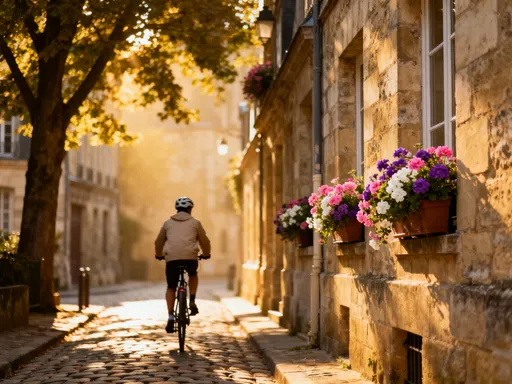
Just beyond the château gates, the old town unfolds like a carefully preserved manuscript. Narrow cobblestone streets wind beneath half-timbered houses, their facades painted in soft ochres, blues, and creams. The Saint-Maurice Cathedral, rising at the heart of the quarter, blends Romanesque solidity with Gothic elegance. Its twin spires dominate the skyline, while inside, stained glass windows cast kaleidoscopic light onto stone floors worn smooth by centuries of footsteps. The cathedral’s architecture tells a story of evolution—of faith adapting, of craftsmanship enduring.
What makes this district compelling is not just its beauty, but its energy. Locals gather in the Place du Ralliement for morning coffee, children play near the fountain in Place Sainte-Croix, and street musicians lend a soundtrack to afternoon strolls. The past is not behind glass here—it’s alive, interwoven with the present. Walking these streets, you feel the pulse of a city that honors its roots without being bound by them.
La Doutre: Where History Meets Bohemian Revival
Cross the Saint-Aubin Bridge, and you enter La Doutre, a neighborhood that once stood on the margins—both geographically and socially. For centuries, this riverside district served as Angers’ industrial and commercial underbelly. Barges unloaded wine, salt, and textiles; artisans and laborers lived in modest stone houses; and the area developed a reputation for grit rather than glamour. But in recent decades, La Doutre has undergone a quiet renaissance—one that respects its heritage while embracing new life.
Today, the 17th- and 18th-century merchant houses have been thoughtfully restored, their facades retaining original details while housing contemporary uses. What were once warehouses now host art galleries, design studios, and boutique workshops. The Maison des Vins d’Anjou, located in a converted riverside building, offers tastings of local Loire wines—crisp whites from Savennières, delicate rosés from Cabernet d’Anjou, and the region’s celebrated sparkling Coteaux du Layon. The experience is unpretentious, educational, and deeply rooted in place.
Wander deeper into La Doutre, and you’ll find cafés where baristas serve single-origin coffee to artists sketching in notebooks. The Atelier des Tanneurs, a cultural space in a former tannery, hosts exhibitions, performances, and community events. Even the streets seem to slow down here—traffic is limited, greenery spills from planters, and residents linger on benches watching the river flow by. This is urban renewal done right: not through luxury condos or chain stores, but through creativity, craftsmanship, and care.
One of the most touching aspects of La Doutre is its sense of continuity. The neighborhood hasn’t erased its past; it has reinterpreted it. Old shop signs remain faintly visible beneath new paint. Stone carvings on building corners still depict tools of forgotten trades. And the river, once a highway of commerce, now serves as a corridor of calm—a place for reflection, not just transport. To visit La Doutre is to witness how a community can honor its history while moving forward with purpose.
The Green Heart: Parc des Prébendes and Urban Nature
In a city celebrated for its stone and history, green spaces offer a vital counterbalance—and none more so than the Parc des Prébendes. Perched on a limestone bluff just south of the cathedral, this elevated garden provides one of Angers’ most breathtaking vantage points. From its manicured lawns and shaded pathways, visitors can gaze across the rooftops of the old town, follow the curve of the Maine River, and watch the light shift over distant vineyards.
Designed in the 19th century on the site of former ecclesiastical lands, the park blends formal French landscaping with the relaxed charm of an English garden. Neatly trimmed hedges frame wilder clusters of shrubs and trees. Fountains trickle softly, and wrought-iron benches invite quiet contemplation. In spring, cherry blossoms bloom in pale clouds; in summer, wisteria drapes over pergolas in cascades of purple; in autumn, the maples turn fiery red. Each season writes its own poem in the park’s landscape.
But beyond its beauty, the Parc des Prébendes serves a deeper function: it is a sanctuary for well-being. Locals come here to read, to meditate, to picnic with family, or simply to sit and breathe. Parents push strollers along gravel paths, students study beneath trees, and elderly couples share apples on sun-warmed benches. The park is not a tourist attraction in the traditional sense—it doesn’t have a ticket booth or a guidebook rating. Yet, it may be one of the most authentic places in Angers, a space where the city’s soul feels most at peace.
Urban green spaces like this are increasingly recognized for their role in mental and physical health. Studies have shown that access to nature, even in small doses, reduces stress, improves mood, and enhances cognitive function. In Angers, the integration of nature into the urban fabric is not an afterthought—it’s a core value. From pocket gardens to riverfront promenades, the city prioritizes places where people can reconnect with the natural world. For visitors, this means a travel experience that nurtures as much as it inspires.
Saint-Serge and the Artistic Pulse
If La Doutre is Angers’ bohemian riverside, then Saint-Serge is its creative engine. Home to the University of Angers and several cultural institutions, this district buzzes with intellectual and artistic energy. Students in paint-splattered jeans debate philosophy outside cafés; flyers for poetry readings and indie concerts plaster community boards; and the scent of fresh bread mingles with the sharp tang of spray paint from nearby murals.
At the heart of this creative ecosystem is the CRAC (Centre Régional d’Art Contemporain), a gallery that has gained national recognition for its bold programming. Unlike traditional museums, CRAC focuses on experimental, site-specific works that challenge viewers to think differently. Exhibitions often engage with social themes, environmental issues, or the history of the region, making art not just something to observe, but something to participate in. The gallery’s open layout and natural light create an inviting atmosphere, where even those new to contemporary art feel welcome.
But the artistic life of Saint-Serge extends far beyond institutional walls. Street art thrives here, with murals transforming blank building facades into vibrant storytelling canvases. One corner features a giant heron rising from a painted marsh—nodding to the wetlands of the Loire; another displays a mosaic of faces, each representing a different generation of Angers residents. These works aren’t vandalism; they’re community conversations, often created in collaboration with local schools and neighborhood groups.
The district also offers some of the city’s most authentic culinary experiences. Bistros serve slow-cooked duck confit, goat cheese from nearby Chèzine, and rillettes made with family recipes passed down for generations. Bakeries offer tourteau fromager, a dense, savory cheesecake unique to Anjou, and tarte Tatin baked with local apples. Shops specialize in regional wines, handmade soaps, and vintage books. This is not a place designed for tourists—it’s a neighborhood where life unfolds in real time, rich with flavor and character.
Along the Maine: Riverside Zones and Slow Travel Moments
The Maine River, though short in length, is the lifeblood of Angers. Flowing from the confluence of the Mayenne and Sarthe just north of the city, it winds through Angers like a silver thread, connecting neighborhoods and offering countless moments of quiet beauty. Unlike the bustling Seine or the grand Loire, the Maine moves with a gentle rhythm, its surface dappled with light, its banks lined with willows and reeds.
For travelers, the river offers a different kind of itinerary—one built on slowness. A leisurely walk along the Quai du Roi or the Promenade du Peyrou can last an hour or an afternoon, depending on your pace. You might stop to watch a barge glide past, its crew waving from the deck. Or you might sit on a bench and observe kingfishers darting over the water, their blue feathers flashing in the sun. These are not “must-see” attractions; they are “must-feel” experiences—moments of presence that linger long after the trip ends.
Cycling is another excellent way to explore the riverbanks. Angers is a bike-friendly city, with well-marked paths and ample rental options. The VéloFrancette route, a long-distance cycling trail from the English Channel to the Atlantic, passes directly through the city, making Angers a natural stop for touring cyclists. Whether you’re riding a few kilometers or a full day, the riverside paths offer flat, scenic terrain, shaded by trees and dotted with rest areas.
For those seeking a different perspective, a small passenger boat operates seasonally, offering short cruises along the Maine. These 45-minute trips provide a unique vantage point—seeing the château from the water, watching swans escort the boat, and hearing the gentle lap of waves against the hull. It’s a quiet luxury, not in the sense of opulence, but in the luxury of time—of moving slowly, of noticing details, of being fully present.
Putting It Together: Crafting Your Themed Itinerary
With so much to see and feel, planning your time in Angers can feel overwhelming. But by organizing your visit around themed districts, you can create a journey that feels both structured and spontaneous. A single day in Angers might begin with a morning at the Château d’Angers, followed by a stroll through the old town and lunch at a café in Place du Ralliement. In the afternoon, cross into La Doutre to visit a gallery or wine shop, then climb to the Parc des Prébendes for sunset views. End the day with dinner in Saint-Serge and a quiet walk along the river.
For a weekend visit, consider deepening your exploration. Spend your first morning touring the Apocalypse Tapestry and the cathedral, then dedicate the afternoon to La Doutre—perhaps with a wine tasting and a visit to the Atelier des Tanneurs. On day two, rent a bike and follow the river east toward Saint-Aubin-sur-Loire, stopping at small vineyards or picnic spots along the way. Alternatively, focus on art: visit CRAC in the morning, explore street murals in Saint-Serge, and attend a performance or exhibition in the evening.
Angers is also a city that changes with the seasons. In spring, the gardens burst into bloom, and outdoor markets overflow with asparagus and strawberries. Summer brings longer days, open-air concerts, and riverside dining. Autumn paints the trees in gold and crimson, while winter offers a quieter, more introspective mood—perfect for museum visits and cozy cafés. No matter when you come, the city rewards curiosity and patience.
Getting around is easy. Angers has a reliable public transit system, including buses and a modern tram line that connects key districts. The city center is compact and walkable, and bike rentals are affordable and widespread. For those arriving by train, the Gare d’Angers Saint-Laud is centrally located, with connections to Paris, Nantes, and Lyon. Parking is available on the city’s outskirts, but driving within the center is discouraged—another invitation to slow down and explore on foot or by bike.
Conclusion: Angers Isn’t Just a Stop—It’s a Story Unfolding
Angers reveals itself not in monuments alone, but in the rhythm of its districts. Each themed area offers a distinct chapter—history, creativity, tranquility—inviting travelers to go deeper. This is a city that rewards curiosity, where wandering becomes wisdom. Let your journey be guided not by checklists, but by connection. Angers doesn’t shout; it whispers, and those who listen leave transformed. More than a destination, it’s an experience of place—of time, texture, and quiet beauty. In a world that often values speed and spectacle, Angers reminds us that the most meaningful travels are those that allow us to pause, to notice, and to belong, if only for a moment.