Istanbul Unhurried: Where Every View Tells a Story
You know that feeling when a city just gets you? Istanbul did that to me. Forget rushing through checklists—this is about slowing down, breathing in the Bosphorus air, and letting the skyline speak. From rooftop teas to hidden hillside benches, I discovered how seeing Istanbul slowly reveals its soul, one breathtaking view at a time. This isn’t just sightseeing—it’s connection. In a world that glorifies speed, Istanbul teaches the quiet power of presence. It’s a city layered with centuries, where empires rose and fell, where East meets West not in conflict but in harmony. To experience it fully, you must shed the tourist mindset and embrace stillness. This journey isn’t measured in miles or monuments, but in moments: the golden light over the Golden Horn, the call to prayer drifting across rooftops, the laughter from a ferry deck at sunset. These are the memories that linger long after the trip ends.
The Magic of Slowing Down in a Layered City
Istanbul is not a city designed for haste. Its streets twist like ancient scripts, its neighborhoods unfold like pages in a well-worn book, and its rhythm pulses with a blend of tradition and modernity that defies simple categorization. To move quickly here is to miss the heartbeat of the place. The true magic of Istanbul reveals itself only when you allow yourself to slow down, to step off the beaten path, and to let the city speak in its own time. This is not merely a travel preference—it is a necessity. The concept of slow travel, often treated as a trend, becomes in Istanbul a natural way of being. It is less about itinerary optimization and more about sensory immersion, about allowing space for unplanned encounters and quiet contemplation.
Consider the mahalle, the Turkish neighborhood, where daily life unfolds at a human pace. In places like Balat or Fener, cobblestone streets wind past colorful Ottoman-era houses, where laundry hangs between balconies and cats nap in sunlit doorways. A visitor who pauses here, rather than rushing to the next landmark, might find themselves sharing a smile with a shopkeeper arranging spices, or watching an elderly woman water geraniums on her balcony. These moments are not distractions—they are the essence of the city. The same applies to the wooden yalis, the historic waterside mansions that line the Bosphorus. Seeing them from a speeding tour boat offers only a postcard image. But watching one from a park bench as the evening light gilds its eaves, or as a ferry glides past with a soft horn, transforms the view into a living scene, rich with history and atmosphere.
Slowing down also means resisting the pressure to “see it all.” Istanbul is vast, with layers of culture, religion, and architecture that could take years to fully appreciate. Attempting to compress this into a few days leads not to discovery, but to fatigue. Instead, choosing one district to explore in depth—spending a morning in a local café, walking without GPS, allowing yourself to get gently lost—can yield deeper understanding than ticking off ten attractions. This shift in mindset, from seeing to experiencing, is the foundation of meaningful travel. It invites curiosity, fosters connection, and opens the door to moments of quiet wonder that no guidebook can predict.
Sunrise at Galata Tower: A Moment Before the Crowds
One of Istanbul’s most iconic vantage points, Galata Tower rises like a sentinel over the city’s northern skyline. Built in the 14th century by the Genoese, its stone walls have witnessed centuries of change, and today, its observation deck offers one of the most comprehensive views of Istanbul. Yet, the experience of visiting can vary dramatically depending on the time of day. Arriving at sunrise transforms the visit from a tourist obligation into a transcendent moment. As the first light touches the domes of the Old City, the city awakens in soft gradients of gold and blue, and the air carries a stillness that feels almost sacred.
The Golden Horn, that historic estuary separating the old and new parts of the city, lies below, often veiled in a delicate morning mist. As the sun climbs, the fog lifts, revealing the silhouette of mosques, the curves of bridges, and the distant hills of Eyüp and beyond. The call to prayer echoes from minarets across the water, a sound that blends with the distant hum of early ferries and the occasional bark of a dog. From this height, the city feels both vast and intimate, a living tapestry of rooftops, spires, and waterways. It is a moment of clarity, when the noise of daily life has not yet begun, and the mind is open to beauty.
Practically speaking, reaching the tower early requires planning. The site opens to visitors in the morning, and arriving at or just after opening time ensures fewer crowds and cooler temperatures, especially in summer. Tickets can be purchased on-site, though checking for any seasonal changes in hours is advisable. Once inside, the narrow spiral staircase leads to the top, where a glass-enclosed platform provides 360-degree views. For the best experience, bring a light jacket—mornings can be cool—and allow at least thirty minutes to simply stand and absorb the scene. Avoid the temptation to immediately photograph everything; instead, let the view settle into your memory first. This is not just a photo opportunity, but a moment of presence, a chance to witness Istanbul as it transitions from night to day, from quiet to life.
Kadıköy’s Hidden Rooftops: The Asian Side’s Best Kept Secret
While most visitors focus their attention on Istanbul’s European side, the Asian shore of the Bosphorus offers a different rhythm, a quieter pulse that rewards those willing to cross the water. Kadıköy, a vibrant district on the Anatolian side, is beloved by locals for its markets, cafes, and cultural energy. But beyond its lively streets lies a collection of rooftop spaces—some public, some tucked into boutique buildings—that provide some of the most striking and underappreciated views of the city skyline. These hidden terraces, often overlooked by guidebooks, offer a fresh perspective, both literally and figuratively.
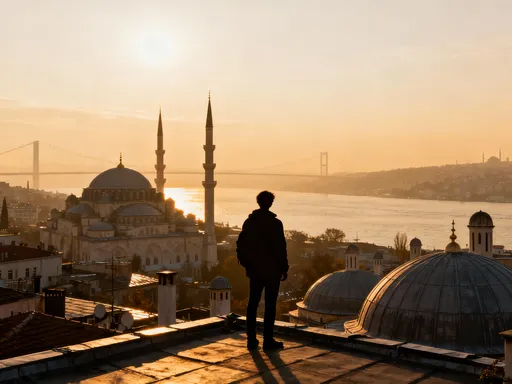
From these elevated perches, the Istanbul skyline unfolds across the water: the minarets of Sultanahmet, the modern towers of Levent, and the curve of the Bosphorus Bridge all come into view. The contrast is striking—on one side, the historic heart of the city; on the other, a neighborhood where art galleries, independent bookshops, and organic cafes thrive. The atmosphere on these rooftops is relaxed, unhurried. Locals sip Turkish tea or çay in small tulip-shaped glasses, read novels, or chat in low voices as the sun sets. There is no pressure to perform or pose; the focus is on being, not showing.
Reaching Kadıköy is simple and scenic: a short ferry ride from Eminönü or Karaköy. The journey itself is part of the experience, offering moving views of the city from the water. Once ashore, exploring on foot is the best way to discover these rooftop spots. While specific venues may change over time, the pattern is consistent—look for small hotels, cultural centers, or cafes with upper-level terraces. Many are welcoming to visitors, especially during daylight hours. When entering such spaces, a respectful demeanor goes a long way. A simple greeting in Turkish, such as “Merhaba,” and a smile can open doors. These rooftops are not tourist traps; they are part of the local fabric, and treating them as such ensures a more authentic and meaningful experience.
The Bosphorus Ferry: Moving Views, Moving Mind
For many travelers, the Bosphorus is best seen from a private cruise. But there is a deeper, more authentic way to experience this legendary strait: by riding the public commuter ferries that have carried Istanbul residents for generations. These vessels, operated by Şehir Hatları, are not designed for tourists—they are part of the city’s daily rhythm. Boarding one is not just transportation; it is an invitation to travel like a local, to move with the city’s pulse, and to witness its changing faces from the water.
The full-route ferry from Eminönü to Anadolu Kavağı, at the northern end of the Bosphorus, takes about two hours and covers nearly the entire length of the strait. Along the way, the landscape shifts continuously. In the south, the skyline is dense with history—Topkapı Palace, the Maiden’s Tower, the fortress of Rumeli Hisarı. Further north, the shores become greener, dotted with wooden yalis, fishing villages, and forested hills. Eagles sometimes circle overhead, and the air grows fresher, scented with pine and salt. The journey offers a rare chance to see Istanbul not as a collection of monuments, but as a living, breathing city connected by water.
For the slow traveler, this ferry ride is a form of mindfulness in motion. There is no need to rush, no checklist to complete. Simply finding a seat on the upper deck, facing the direction of travel, allows for uninterrupted viewing. The rhythm of the waves, the gentle rocking of the boat, and the quiet conversations around you create a meditative atmosphere. Many locals use this time to read, nap, or gaze out in silence. To blend in, consider bringing a book or a notebook. Tickets are affordable and can be purchased at the dock; using an Istanbulkart, the city’s transit card, makes boarding seamless. Whether taken in the morning light or the golden hour of late afternoon, the Bosphorus ferry is not just a ride—it is a journey into the soul of Istanbul.
Pierre Loti Hill: A Quiet Ascent with Golden Views
Nestled in the historic district of Eyüp, on the European side of Istanbul, Pierre Loti Hill is named after the 19th-century French writer who found inspiration in its serene views. Today, it remains one of the city’s most peaceful vantage points, offering a panoramic outlook over the Golden Horn, with the Old City stretching into the distance. The journey to the top is part of the experience—either by a short cable car ride or a gentle walk through a quiet cemetery shaded by tall cypress trees. Both paths encourage reflection, setting the tone for what awaits at the summit.
The cemetery itself is a place of quiet dignity. Cypress trees, long associated with mourning and eternity in Turkish culture, stand like sentinels among the weathered headstones. The path winds upward, lined with wildflowers in spring and dappled sunlight in summer. It is a space of stillness, where the noise of the city fades and the mind begins to settle. Upon reaching the top, the view unfolds in a sweeping arc: the shimmering waters of the Golden Horn, the domes of Fatih Mosque, and the distant silhouette of Galata Tower. In the café at the summit, visitors can sit with a glass of apple tea, a local favorite, and simply watch the light shift across the water.
This site holds religious significance for many, as the Eyüp Sultan Mosque, one of Istanbul’s holiest sites, is located nearby. Visitors are expected to dress modestly and behave respectfully, especially when walking through the surrounding area. The atmosphere is one of reverence, not spectacle. There are no loud guides or crowds here, only the occasional murmur of conversation and the clink of tea glasses. For the slow traveler, Pierre Loti Hill offers a rare gift: a moment of solitude in a bustling city. It is a place to pause, to breathe, and to let the beauty of Istanbul sink in without distraction.
Rooftop Retreats in Sultanahmet: History at Eye Level
Staying in Sultanahmet, the historic heart of Istanbul, places you within walking distance of Hagia Sophia, the Blue Mosque, and Topkapı Palace. But the true luxury of this neighborhood lies not just in proximity to landmarks, but in the possibility of viewing them from above. Boutique hotels with rooftop terraces offer an intimate way to experience the city’s history—not as a distant monument, but as a living presence just beyond your morning coffee. These rooftop retreats transform sightseeing from an activity into a daily ritual, one that begins with the sunrise and ends with the mosque lights glowing against the night sky.
Imagine waking early and stepping onto a quiet terrace, a cup of Turkish coffee in hand, as the first light touches the dome of Hagia Sophia. The city is still soft, the air cool, and the world feels hushed. From this height, the architectural harmony of the Old City becomes clear—the way the minarets frame the domes, how the rooftops cascade toward the sea. As the day progresses, the terrace becomes a vantage point for observing life below: the first tour groups gathering, the street cleaners at work, the pigeons circling the mosque courtyard. In the evening, the same space offers a front-row seat to the illumination of the Blue Mosque, its tiles glowing in deep blues and whites under carefully placed lights.
When choosing accommodations in Sultanahmet, a rooftop terrace should be a priority. While not all hotels have them, many boutique properties have converted historic buildings into intimate guesthouses with carefully designed upper-level spaces. Look for listings that emphasize views, and read reviews that mention the rooftop experience. These spaces are often small, designed for relaxation rather than entertainment, with simple seating and unobstructed sightlines. They are not meant for parties, but for quiet moments of connection—with the city, with yourself, with the flow of time. For families or solo travelers alike, this kind of stay deepens the travel experience, turning every glance out the window into a moment of wonder.
Beyond the Postcard: Finding Personal Viewpoints
The most memorable views in Istanbul are not always the famous ones. While the panorama from Galata Tower or the vista from Çamlıca Hill are undeniably impressive, the moments that stay with you are often the unexpected ones—the quiet bench in Gülhane Park where you watched the sunrise over Topkapı’s gardens, the pause on a tram ride when the Golden Horn sparkled below, or the instant you turned a corner and saw a seagull silhouetted against the dome of a mosque. These are the personal viewpoints, the ones that belong only to you, shaped by timing, mood, and presence.
Discovering such moments requires a shift in habit. It means walking without relying on GPS, allowing yourself to wander, to follow a scent of grilled fish or the sound of a street musician. It means talking to locals—not just for directions, but for stories. A shopkeeper might point you to a hidden garden, a ferry worker might recommend a quiet pier, a grandmother on a park bench might share a saying about the changing light. These interactions are not transactions; they are invitations into the fabric of daily life.
Carrying a small notebook can enhance this practice. Instead of reaching for your phone every time you see something beautiful, try sketching a scene, jotting down a phrase, or recording a feeling. These notes become more meaningful than photographs, capturing not just what you saw, but how you felt. Over time, you begin to notice patterns—the way the city changes with the seasons, how light falls differently in winter and summer, how the rhythm of life shifts from morning to night. These observations deepen your connection to Istanbul, transforming it from a destination into a place you come to know.
Slow travel, at its core, is about intention. It is about choosing depth over breadth, presence over productivity. In a city as rich and layered as Istanbul, this approach unlocks a different kind of beauty—one that is not staged, not filtered, but real. It is the beauty of a shared smile, of a quiet moment on a hillside, of a city that reveals itself not in hours, but in heartbeats.
Istanbul doesn’t reveal itself in hours—it unfolds over days, in quiet moments and lingering glances. By choosing to move slowly, we trade checklists for connection, crowds for clarity, and snapshots for stories. These viewpoints aren’t just places on a map—they’re invitations to pause, reflect, and fall in love with a city that breathes across continents. So next time, don’t just visit Istanbul. Feel it.