You Won’t Believe These Hidden Art Spaces in Rio
Rio de Janeiro isn’t just beaches and carnivals—its soul lives in secret art spaces tucked away from the crowds. I stumbled upon galleries in abandoned warehouses, murals whispering stories in quiet alleys, and studios where creativity pulses like a heartbeat. These spots offer a raw, authentic side of Rio most tourists miss. If you're craving art that feels alive, not staged, this is your gateway to the city’s underground pulse. Far from the polished facades of postcard landmarks, a quieter revolution thrives in forgotten corners, where paint, poetry, and passion converge to tell the true story of a resilient, expressive city.
Beyond the Postcard: Rio’s Artistic Undercurrent
Rio de Janeiro is often celebrated for its sweeping panoramas—Christ the Redeemer overlooking glittering bays, golden sands of Copacabana, and the rhythmic energy of Carnival parades. Yet beneath this iconic imagery lies a deeper, more intimate cultural current, one that flows through narrow alleyways, across cracked concrete walls, and inside once-forgotten buildings now reborn as creative sanctuaries. These hidden art spaces represent a parallel narrative of the city, one shaped not by tourism boards but by local artists, community organizers, and cultural activists who believe art should be accessible, provocative, and deeply rooted in lived experience.
Unlike the curated exhibitions of formal museums, these grassroots spaces thrive on spontaneity and authenticity. They emerge not from institutional budgets but from collective will. In neighborhoods far from the tourist trail, art becomes a form of resistance, a tool for reclaiming neglected spaces and amplifying voices often left unheard. The contrast is striking: where mainstream Rio dazzles with spectacle, these underground scenes invite contemplation. They don’t seek to impress—they aim to connect, challenge, and heal. Visitors who step into this world quickly realize they are not just observing art, but witnessing a living dialogue between artist and community.
What makes these spaces so compelling is their refusal to conform. They reject commercialization, resist gentrification, and often exist in defiance of bureaucratic neglect. A mural in a favela staircase isn’t created for Instagram likes—it’s painted to honor a lost neighbor, celebrate Afro-Brazilian heritage, or protest social injustice. An art installation in a derelict factory isn’t meant to sell tickets—it’s a temporary sanctuary for experimental performance, poetry readings, and youth workshops. These are not destinations designed for consumption; they are acts of cultural survival, breathing life into areas long deemed unworthy of attention.
Understanding Rio through these spaces means shifting perspective. It means looking beyond the skyline and listening to the whispers of a city that expresses itself in color, texture, and symbolism. It means recognizing that beauty here is not always polished—it’s often raw, urgent, and unapologetically real. For the traveler seeking depth over dazzle, these hidden art spaces offer a rare chance to engage with Rio not as a postcard, but as a living, breathing work of art.
The Heartbeat of Street Art: Neighborhoods That Paint Themselves
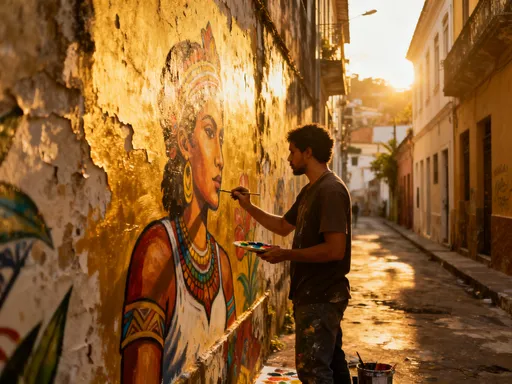
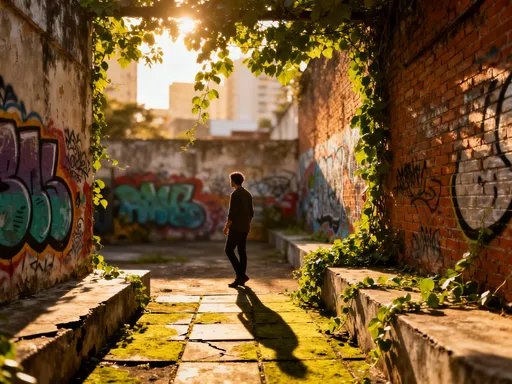
If Rio’s soul has a visual language, it speaks through street art. In districts like Santa Teresa, Lapa, and Maré, walls are not barriers—they are pages in an open-air book, filled with stories of identity, resistance, and hope. Here, murals are not mere decorations; they are declarations. They transform dull surfaces into vibrant testaments of community pride, political awareness, and cultural memory. Every brushstroke carries intention, every figure on the wall a symbol of something greater than aesthetics alone.
Santa Teresa, perched on a hill with winding cobblestone streets and colonial-era homes, has long been a haven for artists. Once a quiet retreat for intellectuals and creatives, it has evolved into one of Rio’s most dynamic open-air galleries. Wander through its alleys and you’ll encounter massive murals depicting indigenous faces, Afro-Brazilian deities, and surreal dreamscapes blending nature and myth. One well-known project, supported by local collectives, transformed an entire block into a mosaic of hand-painted tiles and graffiti, each panel contributed by a different resident. The result is not just visually stunning—it’s a testament to community ownership, where art becomes a shared language of belonging.
Lapa, famous for its nightlife and historic arches, also pulses with artistic energy during daylight hours. Beneath the revelry of samba clubs and bars lies a network of alleyways covered in politically charged graffiti. Artists use these walls to comment on inequality, police violence, and environmental degradation. A striking mural near the Selarón Steps—distinct from Jorge Selarón’s own colorful tiles—depicts a child holding a paintbrush like a sword, symbolizing the power of creativity as a form of defense. These works are not commissioned; they emerge organically, often overnight, as artists respond to current events with immediacy and courage.
Perhaps the most profound expressions of street art can be found in Maré, a complex of favelas in the city’s North Zone. Despite facing systemic neglect and limited access to formal art institutions, Maré has cultivated a thriving cultural scene. Local organizations have launched initiatives like the Maré Vive project, which trains youth in mural painting and urban storytelling. Entire walls now depict scenes of daily life—mothers cooking, children playing, elders sharing wisdom—celebrating the dignity and resilience of the community. These murals do more than beautify; they combat stigma, challenge stereotypes, and foster a sense of identity among residents.
What unites these neighborhoods is the understanding that street art is not vandalism—it is visibility. It gives form to voices that might otherwise go unheard, turning public space into a platform for dialogue. For visitors, engaging with this art means more than taking photographs; it means pausing, reading the messages, and respecting the context. Each piece is rooted in a specific reality, shaped by the people who live there. To witness it is to gain insight into Rio’s deeper rhythms, where creativity is not a luxury, but a necessity.
From Ruins to Renaissance: Unexpected Venues Turned Art Havens
Some of Rio’s most powerful artistic experiences unfold not in gleaming galleries, but in places once written off as lost. Abandoned factories, disused warehouses, and crumbling theaters—structures once symbols of urban decay—have been reclaimed by artists and collectives as spaces of imagination and renewal. These transformations are not funded by government grants or corporate sponsors; they are acts of grassroots reinvention, driven by vision, determination, and a deep belief in art’s power to revitalize both spaces and spirits.
One such space is a former textile factory in the port district of Gamboa. Once silent for decades, its rusted gates now swing open to reveal a labyrinth of studios, exhibition halls, and performance spaces. Known informally as Casa do Criador, the space operates on a cooperative model—artists pay minimal fees to cover utilities, and all decisions are made collectively. The raw brick walls, exposed beams, and peeling paint are not hidden; they are embraced as part of the aesthetic, a reminder of the building’s history and the resilience of what now grows within it. Temporary installations, experimental theater, and community workshops take place weekly, drawing both locals and curious visitors seeking something beyond the conventional.
Another example lies in the heart of downtown, where an old movie theater—closed since the 1990s—has been transformed into a multidisciplinary cultural center. Without official restoration, artists and volunteers stabilized the structure using salvaged materials, turning the former projection room into a darkroom for analog photography and the auditorium into a space for immersive light projections. The scent of turpentine and sawdust lingers in the air, mingling with the hum of conversation and the occasional burst of live music. Visitors walk on wooden planks laid over cracked tile floors, feeling the weight of history beneath their feet and the thrill of creation above.
What makes these spaces so emotionally resonant is their impermanence. They exist in legal gray zones, often without formal permits, surviving on the margins of the city’s regulatory framework. Yet this vulnerability is also their strength—it fosters a sense of urgency, a commitment to making every moment count. Exhibitions are fleeting, performances unannounced, and collaborations spontaneous. There is no pretense of permanence; instead, there is a celebration of the now.
For the traveler, visiting these spaces is an exercise in humility and presence. There are no gift shops, no audio guides, no timed entry tickets. You arrive not as a consumer, but as a witness. You listen to the echoes of the past and the whispers of the future. You feel the pulse of a city that refuses to let its forgotten places stay silent. In these ruins reborn as temples of creativity, Rio reveals a profound truth: beauty can rise from neglect, and art can be the first step toward healing.
Meet the Makers: Artists Shaping Rio’s Underground Scene
Behind every mural, installation, and pop-up exhibition in Rio’s underground art scene are individuals whose lives are deeply intertwined with their work. These are not distant figures in elite studios, but neighbors, mentors, and activists who create art as both expression and survival. Their stories reflect the challenges of living and working in a city marked by inequality, yet they also reveal extraordinary resilience, ingenuity, and hope.
Take Ana Silva, a visual artist born and raised in the Tijuca neighborhood. After losing her job during the economic downturn, she began painting on discarded wood and metal scraps found near construction sites. Her works—abstract compositions blending urban debris with delicate brushwork—quickly gained attention in local exhibitions. Today, she leads free art workshops for teenagers in public parks, teaching them to transform waste into beauty. “Art doesn’t need expensive materials,” she says. “It needs intention. When a young person picks up a brush, they’re not just making art—they’re claiming space.”
Then there’s Rafael Mendes, a graffiti writer turned community organizer in Complexo do Alemão. Once labeled a vandal by authorities, he now collaborates with schools and local councils to create large-scale murals that celebrate Afro-Brazilian culture and promote peace. His most famous piece, painted across the side of a community center, depicts a giant hand releasing a flock of origami birds—each folded by a different child in the neighborhood. The project, called Mãos que Criam (Hands That Create), has since expanded to other favelas, proving that art can be both a personal outlet and a collective force for change.
Isabela Costa, a multimedia artist from Barra da Tijuca, uses recycled electronics and found objects to build interactive sound installations. Her work explores themes of memory and displacement, often incorporating field recordings from Rio’s markets, beaches, and bus terminals. One of her most moving pieces, displayed in a repurposed shipping container, plays a loop of children’s laughter layered with the distant sound of police sirens—a haunting yet poetic reflection on joy and fear coexisting in urban life. “We don’t need high-tech labs to make powerful art,” she explains. “We have stories, we have scraps, we have each other.”
These artists share a common thread: they create not for fame or fortune, but because they must. Limited resources push them toward innovation—using house paint instead of acrylics, repurposing furniture for installations, organizing barter-based art exchanges. Their studios are often their living rooms, their galleries the streets themselves. Yet their influence extends far beyond Rio. International curators have taken notice, and some of their works have been featured in biennials and traveling exhibitions. Still, they remain rooted in their communities, believing that art’s true value lies in its ability to inspire, heal, and unite.
How to Find These Spots Without Getting Lost (Or Looking Like a Tourist)
Discovering Rio’s hidden art spaces requires more than a map—it demands curiosity, respect, and a willingness to step off the beaten path. While guidebooks may highlight museums and landmarks, the underground scene thrives on local knowledge. The best way to access these spaces is through community-led walking tours, often organized by artists or cultural collectives. These tours not only provide safe navigation but also offer context—stories behind the murals, introductions to creators, and insights into the neighborhoods’ histories.
Timing matters. Many art spaces operate on irregular schedules, opening only for events, workshops, or weekend exhibitions. Visiting during daylight hours, particularly between 10 a.m. and 4 p.m., increases the chances of encountering open studios or public installations. Avoid wandering alone in unfamiliar areas, especially after dark. Instead, join group tours through organizations like Circuitos Criativos or Favela Orgânica, which prioritize safety and cultural sensitivity.
Transportation is another key consideration. While ride-sharing apps are convenient, they may not always drop you at the exact location of a hidden gallery or mural. Opt for local buses or guided walking routes when possible—they offer a more immersive experience and reduce the risk of appearing like an aimless tourist. Wear comfortable shoes, carry water, and keep your phone charged, but resist the urge to constantly film or photograph. Observe quietly. Ask permission before taking close-up shots of people or private property.
Etiquette is essential. These spaces are not theme parks; they are part of living communities. Avoid loud conversations, littering, or touching artworks unless invited. Support artists directly by purchasing small pieces, donating to crowdfunding campaigns, or attending benefit events. Many creators sell prints, zines, or handmade goods at modest prices—your contribution helps sustain their work. Above all, approach each visit with humility. You are a guest in someone’s cultural world. Listen more than you speak. Let the art speak for itself.
Art as Urban Therapy: Why These Spaces Matter Beyond Aesthetics
The impact of Rio’s hidden art spaces extends far beyond visual pleasure. They serve as vital tools for social transformation, offering alternatives to violence, disengagement, and urban despair. In communities where youth face limited opportunities, art programs provide structure, mentorship, and a sense of purpose. Studies conducted by local NGOs have shown that neighborhoods with active cultural initiatives report lower rates of vandalism and petty crime, as young people find constructive outlets for their energy and emotions.
In Maré, for example, the Redes de Talents project has engaged over 300 teenagers in visual arts, music, and theater over the past five years. Participants receive training, materials, and performance opportunities, many for the first time. Teachers and social workers note improvements in school attendance, self-esteem, and conflict resolution skills. One former participant, now studying graphic design, said, “Before, I thought my future was either prison or nothing. Now I know I can create something that lasts.”
Public art also plays a role in reclaiming neglected spaces. A once-dangerous staircase in the favela of Chapéu Mangueira was transformed by a mural project into a tourist attraction and community landmark. The effort, led by local artists and residents, not only beautified the area but increased foot traffic, encouraged small businesses, and fostered neighborhood pride. Similar initiatives in Santa Marta and Vidigal have demonstrated that art can be a catalyst for urban renewal without displacing residents—a rare alternative to gentrification.
These spaces also strengthen social bonds. In a city often divided by class and geography, art becomes a bridge. Collaborative projects bring together people from different backgrounds, fostering dialogue and mutual understanding. When a mural is painted collectively, when a performance is staged in a shared courtyard, a subtle but powerful shift occurs: the public space becomes truly public, belonging to everyone and no one at once. In this way, art functions as urban therapy—mending not just walls, but relationships, identities, and hopes.
Your Next Move: How to Experience Rio’s Art Soul Responsibly
As you plan your journey into Rio’s hidden art world, remember that true discovery is not about collecting experiences like souvenirs. It’s about presence, respect, and reciprocity. Seek not just to see, but to understand. Listen to the stories behind the colors. Learn the names of the artists. Ask how you can support their work beyond a photograph or a passing comment.
Choose experiences that prioritize community benefit. Support tours led by local residents. Purchase art directly from creators. Share their work on social media with proper credit and context. Avoid treating favelas or marginalized neighborhoods as backdrops for personal content—these are homes, not stages. Your presence should leave a positive trace, not a disruption.
Carry with you the understanding that art in Rio is not separate from life—it is woven into its fabric. It rises from struggle, celebrates resilience, and imagines better futures. When you stand before a mural painted on a crumbling wall, you are not just looking at art. You are witnessing courage, memory, and the unyielding human desire to create, even when the odds are against it.
So go beyond the postcard. Step into the alleys, the courtyards, the forgotten factories. Let Rio’s underground pulse become your guide. And when you return home, carry not just images, but a deeper awareness: that the most powerful art is not always the loudest, but the one that speaks quietly, insistently, from the heart of a city that refuses to be silenced.