You Won’t Believe What I Ate in Brasov — A Food Adventure Like No Other
Nestled in the heart of Transylvania, Brasov isn’t just about fairy-tale castles and mountain views — it’s a hidden food paradise waiting to be explored. I went in looking for history, but left obsessed with smoky sausages, warm mămăligă, and sweet cheese pastries. This is real, hearty cuisine shaped by centuries of tradition. If you think Romanian food is just cabbage and potatoes, trust me — you’re in for a serious surprise. The moment I stepped into the cobbled squares of the Old Town, the scent of grilled meat and wood-fired ovens wrapped around me like a welcome embrace. Food here isn’t an afterthought — it’s the soul of the city, served with pride on every table.
Arrival in Brasov: First Impressions of a City Between Mountains and Myths
As the train slowed into Brasov’s quiet station, the Carpathian Mountains rose like sentinels in the distance, their peaks dusted with early snow. The air was crisp, carrying the faint woodsmoke of village hearths. This city, cradled between forested hills and historic fortresses, feels like a place out of time. The first view of Council Square, with its colorful Baroque buildings and the iconic Black Church standing tall, evokes wonder. But beyond the postcard-perfect scenery, it’s the rhythm of daily life that draws you in — the laughter spilling from sidewalk cafés, the clatter of dishes from open kitchen windows, the vendors arranging baskets of apples and honey at the edge of the square.
Walking the cobblestone streets, I quickly noticed how food anchors the city’s identity. Unlike destinations where dining feels commercialized, Brasov’s culinary culture is deeply woven into its social fabric. Locals gather not just to eat, but to connect — over long lunches, shared platters, and glasses of homemade țuică. Even my first meal, a simple bowl of bean soup at a corner tavern, came with a warm smile and an invitation to ‘eat like family.’ It was then I realized: in Brasov, food isn’t just sustenance — it’s hospitality in its purest form.
The transition from tourist to guest happened quietly. I came to see the Rope Street, the narrowest in Europe, but ended up lingering in a courtyard where a grandmother was rolling dough for plăcinte. She offered me a bite — crisp on the outside, filled with green onions and tangy cheese — and in that moment, sightseeing faded into the background. The real journey had begun, not through monuments, but through flavors passed down through generations.
The Heart of Romanian Flavor: Understanding Local Cuisine Basics
To appreciate Brasov’s food, one must first understand its roots. Romanian cuisine is often misunderstood as plain or heavy, but it’s actually a rich tapestry of flavors shaped by geography, climate, and centuries of cultural exchange. In Brasov, nestled in the region of Transylvania, the food reflects a blend of Romanian, Hungarian, Saxon, and Slavic traditions. This convergence isn’t just historical — it’s alive in every bite. The use of smoked meats, fermented dairy, and slow-cooked stews speaks to a lifestyle built around preservation and seasonality, where nothing goes to waste and every meal is an act of care.
At the center of it all is mămăligă — a polenta-like dish made from yellow cornmeal. Often served as a base for stews or topped with sour cream and cheese, it’s the Romanian answer to bread. It’s humble, yes, but deeply satisfying. Then there’s smântână, the thick, slightly tangy sour cream that accompanies nearly every savory dish. It cools the heat of paprika, balances the richness of meat, and transforms simple meals into something comforting and complete. Dairy, especially sheep’s cheese like telemea, plays a starring role, as do smoked sausages, pickled vegetables, and wild herbs gathered from the hills.
Meals in Brasov follow a rhythm that feels both familiar and refreshing. Lunch is the main event — often beginning with a warm soup, such as ciorbă de burtă (tripe soup) or a lighter version with vegetables and herbs. This is followed by a hearty main course: grilled meats, stuffed vegetables, or stews simmered for hours. Dinners tend to be lighter — perhaps a plate of fresh cheese with honey, a slice of pie, or leftovers warmed with love. And desserts? They’re not an afterthought. From sweet cheese pancakes to fruit-filled dumplings, Romanian sweets are rich, homey, and deeply nostalgic.
What makes this cuisine special isn’t just the ingredients, but the intention behind them. Cooking here is an act of memory — a way of honoring ancestors, celebrating seasons, and welcoming guests. It’s food made to be shared, not rushed. In a world of fast meals and convenience, Brasov offers a reminder that eating can be an expression of love.
Must-Try Dishes: A Deep Dive Into Brasov’s Signature Foods
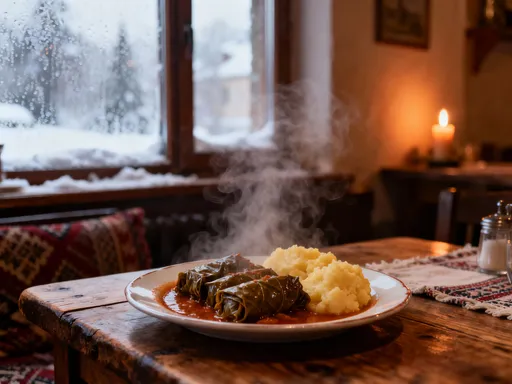
No visit to Brasov is complete without tasting sarmale — cabbage rolls stuffed with a savory mix of minced pork, rice, and herbs, then slow-cooked in a sour tomato broth. Traditionally prepared during holidays, they’re now a staple on restaurant menus year-round. The best ones I tried were wrapped in fermented cabbage leaves, giving them a subtle tang that cuts through the richness. Served with a generous spoonful of sour cream and a side of mămăligă, they’re a perfect harmony of texture and taste — tender, tangy, and deeply comforting.
Equally iconic are mici — grilled minced meat rolls made from a blend of beef, lamb, and pork, seasoned with garlic, black pepper, and thyme. These skinless sausages are a national favorite, especially in summer, when families gather around backyard grills. In Brasov, they’re often cooked over wood or charcoal, giving them a smoky crust that gives way to juicy, aromatic meat inside. Eaten with fresh bread and a cold beer, mici are the essence of Romanian comfort food — simple, satisfying, and full of flavor.
Then there are cârnați — smoked sausages that vary by region but in Transylvania tend to be firm, deeply spiced, and rich with paprika and garlic. Sliced thin and served cold on a platter or grilled until crisp, they’re a staple at family gatherings and taverns alike. I remember one evening at a small inn outside the city, where a plate of sliced cârnați arrived alongside pickled peppers and a basket of fresh bread. Paired with a glass of țuică, a plum brandy that warms you from the inside out, it felt like the most authentic Romanian experience possible.
These dishes aren’t just meals — they’re edible history. Each bite carries the imprint of generations who valued patience, seasonality, and generosity. And while they may seem rustic, their flavors are anything but simple. The balance of smoke, spice, acidity, and creaminess reveals a cuisine that understands how to nourish both body and soul.
Where the Locals Eat: Authentic Eateries Beyond the Tourist Trail
While the restaurants in Council Square offer convenience and charm, the true heart of Brasov’s food scene beats in the family-run eateries tucked into side streets and nearby villages. These places don’t rely on flashy menus or Instagrammable decor — their appeal lies in authenticity. One of my most memorable meals was at a small han, a traditional inn, just a short drive from the city center. The wooden beams overhead were darkened by decades of smoke, and the walls displayed old farming tools and embroidered linens. A folk melody played softly in the background as the owner, Maria, brought out dish after dish like she was feeding her own children.
Here, I tasted tocăniță — a slow-simmered meat stew thickened with flour and enriched with smântână. It was served in a clay pot, still bubbling, with a wedge of mămăligă on the side. The beef had melted into tenderness, infused with onions, paprika, and a hint of wine. Every bite felt like a revelation. This wasn’t just food — it was care, time, and tradition served on a plate. And the price? Less than what I’d pay for a sandwich in many Western cities.
Another favorite was a no-name restaurant near the market, where the menu was handwritten on a chalkboard and the chairs were mismatched. But the aroma of roasting pork and fresh herbs was irresistible. I ordered papanasi — a fried or boiled doughnut-like dumpling filled with sweet cheese and topped with sour cream and berry jam. It was decadent, yet balanced — the tartness of the jam cutting through the richness of the cheese and cream. As I ate, an elderly couple at the next table smiled and nodded, as if to say, ‘You’ve chosen well.’
What sets these places apart is the absence of pretense. The staff aren’t trained to upsell — they’re trained to feed. Portions are generous, service is warm, and the ingredients are often sourced from local farms or even the owner’s garden. These are not ‘experiences’ crafted for tourists; they’re everyday dining spots where locals bring their families, celebrate birthdays, and unwind after work. To eat here is to be welcomed into the rhythm of Romanian life.
Markets and Street Food: Tasting Brasov One Bite at a Time
For a true taste of Brasov, no visit is complete without a morning at the central market. Open daily, it’s a vibrant hub of color, scent, and sound. Rows of stalls overflow with seasonal produce — plump tomatoes, golden squash, wild mushrooms, and bundles of fresh dill and parsley. But it’s the dairy and meat sections that truly captivate. Wheels of sheep cheese, some aged and crumbly, others soft and creamy, are displayed beside jars of honey infused with forest herbs. Cured meats hang in neat rows — smoked hams, sausages, and slivers of bacon that promise deep, smoky flavor.
Here, I met Ana, a vendor who’s sold cheese at the market for over thirty years. She offered me a taste of her homemade telemea, made from sheep’s milk and aged in a cool cellar. It was rich, slightly salty, with a texture that melted on the tongue. ‘This is how cheese should taste,’ she said with pride. ‘No factories, no chemicals — just grass, milk, and time.’ Her words stayed with me, a reminder that food here is still deeply connected to the land.
Street food in Brasov is simple but unforgettable. Plăcinte, savory pies baked in wood-fired ovens, come filled with cheese, potatoes, or mushrooms. I found a small stand near the market where an elderly woman folded the dough by hand, her movements swift and sure. The plăcintă I bought was still warm, the crust flaky, the cheese filling gooey and aromatic. Another favorite was gogoși — sweet, fluffy doughnuts fried until golden and rolled in sugar. Often enjoyed as a weekend treat, they’re the kind of food that brings back childhood memories, no matter where you’re from.
What makes the market special is its authenticity. There are no souvenir stands or overpriced trinkets — just real food for real people. It’s where grandmothers buy ingredients for Sunday lunch, where chefs source seasonal produce, and where curious travelers can taste the essence of Transylvanian life. To walk through it is to understand that food here isn’t a commodity — it’s a connection.
Cooking Like a Local: A Hands-On Experience with a Brasov Family
One of the most transformative moments of my trip was spending an afternoon cooking with a local family in a village just outside Brasov. Invited through a community-based tourism program, I arrived at a modest home with a red-tiled roof and a garden bursting with herbs and vegetables. The host, Elena, greeted me with a hug and led me straight to the kitchen, where a large pot was already heating on the stove. ‘Today, you’ll learn how Romanians feed those they love,’ she said with a smile.
We began with mămăligă — a dish that sounds simple but requires precision. Elena explained that the key is constant stirring, adding cornmeal slowly to boiling water to avoid lumps. ‘Like life,’ she joked, ‘you have to be patient and pay attention.’ As the polenta thickened, she shared stories of her childhood — how her grandmother would make it daily, how it was served to workers after a long day in the fields. When it was ready, she turned it onto a wooden board, sliced it like bread, and topped it with fresh cheese and sour cream. Eating it fresh from the pot, I understood why it’s called ‘Romanian bread.’
Next came tocăniță, a stew made with pork, onions, and paprika, simmered until the sauce was rich and velvety. Elena showed me how to brown the meat properly, how to sweat the onions until golden, and when to add the flour to thicken the sauce. ‘No recipes,’ she said. ‘Just your eyes, your nose, and your heart.’ As the stew bubbled, the house filled with a warmth that went beyond temperature. Her children came home from school, her husband returned from the garden, and soon we were all gathered around the table, sharing food and stories.
That meal was more than nourishment — it was a lesson in belonging. In a world that often feels disconnected, cooking and eating together reminded me of the power of simple acts. Food, in this home, wasn’t just about survival — it was a language of care, a way of saying ‘you matter.’ By participating, I wasn’t just learning recipes — I was being welcomed into a culture that values presence, generosity, and tradition.
Beyond the Plate: How Food Connects You to Brasov’s Soul
Looking back, I realize that my journey through Brasov was never really about ticking off attractions or snapping photos. It was about connection — to people, to place, to history. Every meal became a doorway into a deeper understanding of Romanian life. The long lunches taught me the value of slowing down. The shared platters reminded me that food is meant to be enjoyed in community. The family recipes whispered stories of resilience, migration, and celebration.
In Romania, food is never just food. It’s memory. It’s identity. It’s love made visible. When a grandmother serves you her sarmale, she’s not just offering a dish — she’s sharing a piece of her life. When a vendor hands you a warm plăcintă, she’s offering a taste of her hometown. These moments of generosity create bonds that transcend language and culture.
And there’s a quiet beauty in that. In an age of fast travel and curated experiences, Brasov teaches us that the most meaningful journeys are often the ones that happen around a table. By choosing to eat like a local — to sit longer, ask questions, accept second helpings — we do more than taste new flavors. We honor traditions, support small producers, and keep cultural heritage alive.
Food tourism, when done with respect and curiosity, becomes a form of preservation. It ensures that family recipes aren’t lost, that village inns stay open, that markets remain vibrant. It reminds us that behind every dish is a story, a person, a lifetime of care.
Conclusion
Brasov offers more than postcard views — it offers a warm, flavorful invitation to slow down and savor life. Its cuisine tells stories of resilience, celebration, and connection. By choosing to eat like a local, travelers don’t just taste food — they taste history, love, and belonging. Let your next journey be guided not just by landmarks, but by the aroma of a stew pot and the smile of someone sharing their family recipe. In Brasov, every meal is an act of welcome. And once you’ve been welcomed, you’ll never see travel — or food — the same way again.