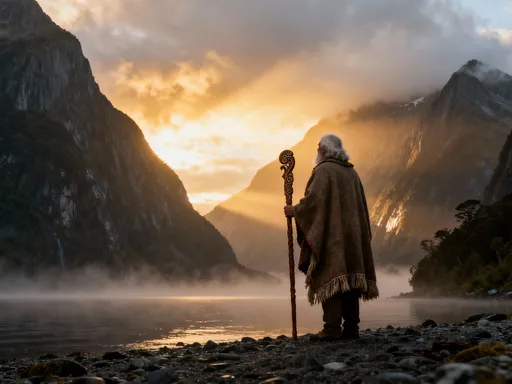
What Most Travelers Miss About Milford Sound’s True Culture
You’ve probably seen the postcard views of Milford Sound—towering cliffs, cascading waterfalls, and misty fjords. But beyond the camera shots lies something deeper: a living Māori cultural presence most visitors never experience. I ventured off the tourist trail and discovered sacred stories, local traditions, and a connection to nature that transformed my journey. This isn’t just a destination; it’s a cultural awakening waiting to be felt. While millions come for the scenery, few pause to listen to the whispers of the land itself—its ancestral names, its legends, and the enduring spirit of the people who have honored it for centuries. True travel goes beyond sightseeing; it invites understanding, respect, and presence.
The Hidden Heart of Milford Sound
Milford Sound is celebrated as one of the most breathtaking natural wonders in the world. Towering Mitre Peak rises over dark waters, waterfalls spill down sheer rock faces after rain, and seals bask on rocky outcrops while kayakers glide silently beneath the mist. These images dominate travel brochures, documentaries, and social media feeds. Yet, for all its visual fame, the deeper essence of this place—the cultural soul of Piopiotahi, as it is known in te reo Māori—remains largely unseen by the average visitor. Most tourists arrive on cruise boats, snap photos, and depart without ever learning that this landscape is not just admired but revered. The Māori relationship with Fiordland is not a footnote in a tour guide; it is the foundation upon which the land’s meaning is built.
The standard tourism narrative centers on geology and grandeur, focusing on how glaciers carved the fiords over millions of years. While scientifically accurate, this story omits a crucial dimension: the human story. For generations, the Māori iwi (tribes) of the region, particularly the Ngāi Tahu, have passed down knowledge of these waters, mountains, and forests through oral tradition. They navigated the fiords in waka (canoes), harvested resources sustainably, and named places according to ancestral events and spiritual beliefs. When visitors see only the surface beauty, they miss the layers of meaning embedded in every cliff, bay, and current. Recognizing this cultural depth transforms a scenic trip into a meaningful encounter with living heritage.
Understanding Milford Sound through the lens of Māori culture shifts the traveler’s role from observer to guest. It invites a different kind of attention—one that listens more than it photographs, that respects silence as much as spectacle. This deeper awareness does not diminish the natural beauty; rather, it enhances it. The waterfalls become more than photogenic drops of rainwater—they are seen as manifestations of ancestral presence. The silence of the fjord is no longer just atmospheric; it becomes sacred. To experience Milford Sound in its fullness, one must be willing to look beyond the postcard and embrace the cultural heartbeat beneath.
Māori Connection to the Land: A Living Legacy
The Māori name for Milford Sound, Piopiotahi, carries a story that stretches back to the demigod Māui and the lost piopio bird. According to legend, after Māui attempted to win immortality for humankind and failed, a single piopio bird flew south to Fiordland to mourn his death. The name Piopiotahi means 'the single piopio,' and the fiord is said to be the place where the bird’s sorrow echoes in the wind and water. This is not merely folklore; it is a narrative that connects people, nature, and the spiritual world in a way that continues to shape Māori identity today. The land is not separate from the people—it is part of their whakapapa (genealogy) and worldview.
For centuries, Māori traveled to Fiordland for seasonal gathering, hunting, and trade. The region provided pounamu (greenstone), a highly valued resource used for tools and adornments, which was transported across the South Island. These journeys required deep knowledge of the coastline, weather patterns, and waterways. Navigational skills were passed down through generations, and routes were memorized through song and story. The connection was practical as well as spiritual—every inlet and mountain peak had a name and a purpose. This intimate relationship with the environment reflects a philosophy of balance and reciprocity, where taking from the land is always accompanied by care and gratitude.
Today, this legacy is not confined to the past. Ngāi Tahu, the principal iwi of the South Island, maintains kaitiakitanga—guardianship—over Piopiotahi and the surrounding areas. This role involves protecting the environment, preserving cultural sites, and ensuring that development respects both ecological and spiritual values. Māori elders continue to share stories with younger generations, and cultural revitalization efforts have led to the increased use of te reo Māori in public spaces, education, and tourism. When travelers learn that the cliffs they photograph are not just rock formations but ancestors in stone, their experience becomes more profound. The land speaks—if one is willing to listen.
Cultural Experiences Beyond the Cruise Deck
Most visitors experience Milford Sound from the deck of a boat, surrounded by fellow tourists, listening to commentary focused on weather, wildlife, and geology. While informative, this format rarely includes the cultural narratives that give the place its soul. However, there are growing opportunities for travelers to step beyond the standard tour and engage with authentic Māori culture. Some boat operators now partner with local iwi to include storytelling segments led by Māori guides. These moments, often brief but powerful, introduce passengers to the meaning behind the names, the significance of certain landmarks, and the values that guide Māori relationships with nature.
For those seeking a deeper connection, guided cultural walks in nearby areas offer a more immersive experience. Led by Māori hosts, these walks may include karakia (prayers or blessings), waiata (songs), and discussions about traditional uses of plants and resources. Participants learn about rongoā (Māori healing practices), the importance of seasonal cycles, and the concept of manaakitanga—hospitality and care for others. These experiences are not performances for entertainment; they are acts of sharing and education, offered with the hope that visitors will leave with greater understanding and respect.
Access to marae (communal meeting grounds) near Fiordland is limited and requires invitation, but some cultural centers in Te Anau and Manapouri provide welcoming spaces for intercultural exchange. Here, travelers can view traditional carvings, attend evening talks, or participate in workshops on weaving, carving, or language. These encounters foster whanaungatanga—relationships and connections—between hosts and guests. They remind us that culture is not a display behind glass but a living, breathing practice that thrives through interaction and mutual respect.
How to Find the Real Cultural Encounters
With the rise of cultural tourism, it is important to distinguish between authentic experiences and those that are merely symbolic or commercialized. A genuine cultural encounter involves meaningful participation, accurate representation, and direct involvement of Māori communities. Travelers should look for operators who clearly state their partnership with local iwi, employ Māori guides, and incorporate te reo Māori and traditional practices in a respectful way. Websites and brochures that mention specific iwi names, such as Ngāi Tahu, and describe collaborative efforts are more likely to offer authentic programming.
Ask questions before booking. Inquire whether the guides are of Māori descent, how the content is developed, and if profits support the local community. Operators who invest in cultural training, employ local staff, and contribute to iwi-led initiatives demonstrate a commitment beyond tourism marketing. Avoid experiences that reduce culture to costume or caricature—such as performances with no context, or guides who speak only in soundbites without depth. True cultural exchange requires time, intention, and humility.
Respectful behavior is equally important. When visiting culturally significant sites, follow guidance from hosts, speak softly, and avoid touching sacred objects or entering restricted areas. Ask permission before taking photos of people or ceremonial spaces. Practice active listening—do not treat storytelling as background noise. These moments are not interludes between scenic views; they are the heart of the experience. By approaching cultural encounters with openness and care, travelers honor the people who have stewarded this land for generations.
The Role of Story in Shaping the Journey
In Māori culture, storytelling is not entertainment—it is education, preservation, and connection. Legends are not told to amuse but to convey values, history, and relationships with the natural world. When a guide shares the story of Māui and the piopio bird, they are not recounting a myth; they are inviting listeners into a worldview where humans, animals, and landscapes are intertwined. These narratives transform the environment from a passive backdrop into an active participant in the journey. A waterfall is no longer just a cascade of water; it is the tears of an ancestor. A gust of wind becomes the breath of a spirit. The land gains voice and presence.
Travelers who hear these stories often report a shift in perception. The fiord feels different—more alive, more sacred. One visitor recalled standing at the base of Stirling Falls after hearing its Māori name, Waimangu, meaning 'black water,' and understanding it as a place of cleansing and renewal. Another described feeling a deep sense of calm after a guide shared a karakia at the start of a boat tour, realizing that the journey had become a ceremony, not just a sightseeing trip. These emotional responses are not incidental; they are the result of narrative depth and cultural authenticity.
Storytelling also fosters empathy. When travelers learn that Māori ancestors navigated these waters in waka made from native trees, or that pounamu was carried across treacherous passes as a gift of peace, they begin to see the land as a place of human struggle, love, and resilience. This emotional connection leads to greater care and responsibility. People protect what they love, and they love what they understand. Through story, Milford Sound becomes not just a destination, but a relationship.
Traveling with Purpose: From Sightseeing to Understanding
The shift from passive sightseeing to active cultural learning marks a transformation in the traveler’s mindset. It moves the journey from consumption to connection. Consider the experience of a family from Australia who, after years of visiting national parks as photo opportunities, decided to prioritize cultural understanding on their trip to New Zealand. In Fiordland, they joined a small-group tour led by a Ngāi Tahu guide who shared personal stories of growing up near the coast, the importance of protecting marine life, and the meaning of kaitiakitanga. The parents later said it was the most meaningful part of their vacation. Their children, usually glued to screens, asked thoughtful questions and expressed a desire to learn more about Māori culture.
Another traveler, a retired teacher from Canada, participated in a cultural walk where she helped plant native trees as part of a restoration project. The act of placing a sapling into the soil, guided by a Māori elder, became a symbolic gesture of reciprocity. She later wrote, 'I didn’t just take memories from this place—I left a piece of myself behind, in a good way.' These experiences illustrate how cultural engagement enriches travel, making it more memorable, impactful, and personally transformative.
When travelers invest time in understanding the people of a place, their perspective broadens. They begin to see tourism not as a one-way exchange but as a relationship built on respect and responsibility. They become more mindful of their impact, more curious about local ways of life, and more committed to sustainable practices. This shift benefits not only the individual but the communities they visit. It fosters mutual appreciation and supports the preservation of cultural heritage.
Why This Matters: Preserving Culture Through Responsible Tourism
The way we travel has consequences. When tourism focuses only on scenery and convenience, it risks reducing sacred places to commodities. But when travelers seek cultural understanding, they become allies in preservation. Supporting Māori-led tourism initiatives ensures that economic benefits stay within the community, empowering local people to protect their heritage on their own terms. It also helps counteract centuries of marginalization by affirming the value of indigenous knowledge and voices.
Responsible tourism means recognizing that visitors are guests. It means arriving with humility, listening more than speaking, and leaving with gratitude. It means choosing experiences that honor culture rather than exploit it. When travelers support authentic Māori guides, purchase crafts from local artisans, and respect cultural protocols, they contribute to a model of tourism that is sustainable, ethical, and enriching for all.
Milford Sound is more than a natural wonder—it is a cultural treasure. Its true beauty lies not only in its cliffs and waterfalls but in the stories, values, and people who have shaped its meaning over centuries. To experience it fully is to engage with its living culture, to honor its past, and to help protect its future. The next time you plan a journey to Fiordland, go beyond the cruise deck. Seek the stories. Listen to the land. And discover that the most unforgettable part of travel is not what you see—but what you come to understand.