Chasing Light in the Wild: My Camera’s Journey Through Ipoh’s Hidden Nature
You know what? I never expected Malaysia’s quiet city of Ipoh to blow my mind like this. But the moment I stepped into its untouched limestone forests and misty valleys, camera in hand, I was hooked. This is more than travel—it’s visual storytelling at its purest. If you’re after raw, unfiltered natural beauty that few have captured, Ipoh’s wild side is an absolute must-see. Let me show you why.
The Call of Ipoh’s Untamed Landscapes
Often celebrated for its colonial-era architecture and legendary street food, Ipoh quietly holds a deeper secret: a wilderness woven into limestone karsts, jungle trails, and quiet river valleys. While many travelers come for the kaya toast and dim sum, a growing number are discovering that the true soul of this Perak state capital lies beyond the city limits—in the whispering trees, mist-laden hills, and the soft crackle of leaves underfoot. For photographers, this convergence of geology and ecology offers an open canvas. The interplay of light filtering through dense canopies, the contrast of jagged rock against soft moss, and the stillness of untouched water bodies create scenes that feel both ancient and immediate.
What makes Ipoh’s natural surroundings so compelling is their accessibility without sacrificing authenticity. Unlike remote jungle expeditions that require weeks of planning, the wild spaces around Ipoh are within an hour’s drive from central town. Yet, they remain refreshingly under-visited. You can spend hours hiking a trail and not encounter another soul—rare in Southeast Asia’s increasingly crowded travel circuit. This balance of ease and escape makes it ideal for photographers of all levels. Whether you’re a beginner learning exposure or a seasoned shooter chasing golden hour perfection, Ipoh rewards patience with solitude and beauty.
The region’s unique geology—formed over millions of years by limestone erosion—creates dramatic silhouettes and hidden micro-environments. These karst formations host diverse plant life, from pitcher plants clinging to shaded walls to ferns unfurling in humid grottos. The terrain is forgiving enough for casual hikers but rugged enough to feel adventurous. With the right timing and mindset, every bend in the trail offers a new composition: a sunbeam piercing the canopy, a spiderweb glistening with dew, or the silhouette of a distant cliff at dusk. This is nature not staged, but lived in—and it waits quietly for those willing to look.
Kellie’s Castle & the Hidden Waterfalls: More Than Just Ruins
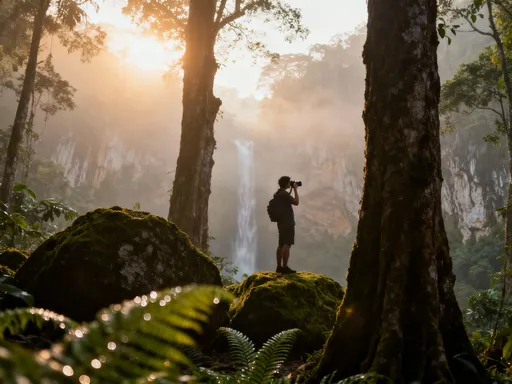
Kellie’s Castle, the unfinished colonial mansion shrouded in jungle, draws visitors with its air of mystery. But few realize that the real magic lies just beyond the tourist path—deep in the surrounding rainforest where hidden waterfalls trickle down mossy rocks. Behind the estate, a network of informal trails winds through dense vegetation, leading to small cascades that sparkle in the early light. These are not grand waterfalls, but intimate ones—perfect for contemplative photography and delicate compositions.
Mornings are the golden window here. Arrive by 6:30 a.m., and you’ll find the forest wrapped in a soft, blue-tinted mist. Sunlight filters through the trees in diagonal shafts, illuminating droplets suspended in the air like tiny diamonds. This is prime time for long-exposure shots—set your shutter to 1–2 seconds to smooth the flow of water into a silky ribbon, contrasting with the sharp textures of wet stone and moss. A tripod is essential, even in daylight, due to the low light beneath the canopy. A polarizing filter helps cut glare on wet surfaces and enhances the green tones of the foliage.
Access is straightforward but requires modest preparation. Enter through the official Kellie’s Castle site—admission is nominal—and ask staff about the rear trail. While not always marked, local guides are sometimes available near the entrance. Stick to established paths to avoid disturbing protected areas or private land. The terrain can be slippery after rain, so wear grippy footwear and carry a small towel to wipe down your gear. Most importantly, practice leave-no-trace principles: no littering, no carving names, and never moving rocks or plants for a better shot. These spaces are fragile, and their beauty depends on restraint.
For macro photographers, this area is a treasure trove. Dew-covered spiderwebs, tiny orchids growing on bark, and the intricate patterns of lichen on stone offer endless detail. Use a macro lens or close-up filter to reveal textures invisible to the naked eye. The interplay of water, light, and organic form turns a simple rock face into a living canvas. And because few visitors venture this far, you’re likely to have these scenes all to yourself—a rare luxury in modern travel photography.
Gunung Lang Recreational Park: Where Nature Meets Accessibility
If Kellie’s Castle offers mystery, Gunung Lang Recreational Park delivers harmony. Nestled just outside Ipoh’s city center, this well-maintained green space centers around a series of interconnected lakes ringed by limestone cliffs and walking trails. It’s a place where nature feels curated but not artificial—a balance that benefits photographers seeking both ease and elegance. The park is open daily, well-patrolled, and family-friendly, making it ideal for early morning or late afternoon shoots without safety concerns.
The lakes are the park’s visual anchor. Calm and reflective, they mirror the surrounding cliffs and sky, creating natural symmetry perfect for wide-angle compositions. Arrive at sunrise, and you’ll witness the water turn into a liquid canvas—soft pinks and golds from the rising sun blending with the gray silhouettes of karst towers. Use a low aperture (f/8 to f/16) to keep both foreground and background in focus, and position yourself near the wooden bridges that cross the water. These structures provide leading lines that draw the eye into the frame, adding depth and narrative.
Mid-morning brings movement. Long-tailed macaques appear along the cliffs and paths, often pausing to groom or play. While they’re not to be approached, they add life to your images—especially when backlit by the sun. A telephoto lens (70–200mm) allows you to capture candid moments without intrusion. Be patient; some of the best shots come from waiting quietly on a bench, letting the scene unfold naturally. Avoid feeding the animals—this is both prohibited and harmful to their behavior.
Weekdays are significantly quieter than weekends, so plan accordingly if crowd-free shots are your goal. Even on busy days, the park’s size allows you to find solitude—simply walk past the main entrance area and follow the outer loop trail. The elevated walkways offer panoramic views, while the lower paths bring you close to water lilies and dragonflies. For evening shoots, the soft glow of street lamps reflecting on the water adds a tranquil urban-nature blend. This park proves that accessibility doesn’t mean compromise—sometimes, the most poetic images are found just minutes from the city.
The Lost World of Tambun: Surreal Landscapes with a Prehistoric Feel
The Lost World of Tambun is best known as a hot spring resort, but for photographers, it’s a gateway to a cinematic landscape. The resort sits in a valley surrounded by 400-million-year-old limestone cliffs, with an artificial lake at its heart. From certain angles, the scene looks otherworldly—like a prehistoric lagoon frozen in time. While the resort itself is commercial, early access (before 8 a.m.) grants photographers a rare window of stillness, when the lake is mirror-smooth and free of boats and swimmers.
This is the perfect setting for reflection photography. Position yourself at the edge of the lake at dawn, and you’ll capture the cliffs and sky perfectly mirrored in the water. Use a polarizing filter to manage glare and deepen the contrast between water and rock. A wide-angle lens (16–35mm) emphasizes the scale of the cliffs, while a drone (flown only in permitted zones) can reveal the full geometric beauty of the landscape. Always check with resort staff about drone regulations—some areas are off-limits due to privacy or safety.
The surrounding jungle adds texture and depth. Thick vines drape from trees, and ferns carpet the shaded ground. Early light creates long shadows and soft highlights, ideal for moody, atmospheric shots. Look for natural frames—branches arching over a path, or rock formations that enclose a view—these guide the viewer’s eye and add storytelling depth. The contrast between the resort’s modern facilities and the ancient geology creates an intriguing visual dialogue: man’s presence in a timeless landscape.
While the hot springs attract families, photographers should focus on the perimeter trails and natural edges of the property. These less-visited zones offer unobstructed views and fewer distractions. Wear neutral-colored clothing to blend in and avoid startling wildlife. And remember: while the setting feels wild, it’s a managed space. Respect signage, stay on paths, and never enter restricted or fenced-off areas. The goal is not to conquer the landscape, but to observe it with humility and care.
Limestone Caves and Secret Grottos: Venturing Off the Beaten Path
Ipoh’s identity is carved in stone—literally. The region’s defining feature is its limestone karst formations, many of which house extensive cave systems. Gua Tempurung, one of the longest caves in Peninsular Malaysia, stretches over 4.5 kilometers and offers a thrilling mix of dry chambers, narrow passages, and illuminated walkways. For photographers, it’s a study in contrast: darkness and light, silence and echo, texture and shadow.
Entering the cave requires preparation. A headlamp is non-negotiable—flashlights can’t match the hands-free convenience needed for steady shots. Bring moisture-proof bags for your camera, as humidity inside can exceed 90%. A tripod with flexible legs can be clipped to gear or balanced on uneven surfaces. Start with high ISO settings (1600–3200) and wide apertures (f/2.8–f/4) to capture detail in low light. Long exposures (5–15 seconds) work well in stable areas, especially when highlighting the soft glow of installed lights against rough cave walls.
The most dramatic shots come at cave entrances, where natural light floods in from outside, creating stark silhouettes. Position a person or tree at the threshold, backlit by the sun, and you’ll capture a powerful contrast between the known and the unknown. These moments are fleeting—best at mid-morning or mid-afternoon when the sun aligns with the opening. Timing your visit around these windows can make the difference between a flat image and a striking one.
Not all caves are open to the public, and some are considered sacred by local communities. Always respect closures and cultural sensitivities. Never touch cave formations—stalactites grow less than a centimeter per century, and oils from skin can halt their growth. Photography should enhance appreciation, not exploit fragility. With care, these subterranean worlds can be shared without harm—reminders of Earth’s slow, quiet artistry.
Rural Escapes: Paddy Fields and Village Life Beyond the City
Just a 20- to 30-minute drive from Ipoh’s center, the landscape shifts from urban to agrarian. Rolling paddy fields stretch across the valley, especially vibrant during planting (April–May) and harvest (August–September) seasons. This is rural Malaysia at its most poetic—waterlogged fields reflecting the sky, farmers in wide-brimmed hats bending over seedlings, and water buffalo resting under shady trees. For photographers, it’s a study in patience and presence.
Golden hour here is transformative. At dawn, a soft fog often hovers above the flooded fields, turning them into ghostly mirrors. Use a low ISO and tripod to capture the stillness. A telephoto lens (100mm or more) compresses the distance, making distant trees appear closer and enhancing the layered effect of fog, water, and sky. Silhouettes of farmers working in the distance add narrative weight—human figures in harmony with the land.
Respect is paramount when photographing village life. Always ask permission before taking close-up shots of people. A smile and a simple gesture go a long way. Many locals are happy to pose if approached politely, and some may even invite you for tea. These interactions often lead to the most meaningful images—not staged, but shared. Avoid intrusive behavior: no following people, no using zoom lenses to spy from a distance.
The changing seasons bring different moods. During planting, the fields are a mosaic of green and mud, full of movement and labor. At harvest, golden stalks sway in the breeze, and the air hums with activity. Both offer rich visual stories. Wide-angle lenses capture the expanse, while macro shots reveal details: a single grain of rice, a muddy boot, a hand holding a sickle. These small moments, when framed with care, speak volumes about tradition, resilience, and connection to the earth.
Practical Tips for Photographers: Gear, Timing, and Transport
Success in Ipoh’s wild spaces depends not just on skill, but on preparation. The tropical climate brings high humidity and sudden rain, so gear protection is essential. Use silica gel packs in your camera bag, and consider a rain cover for your equipment. A sturdy backpack with padded compartments keeps everything organized and accessible during hikes.
Lens choice depends on your focus. A wide-angle lens (16–35mm) is ideal for capturing expansive cliffs, lakes, and cave interiors. A macro lens (100mm) reveals the intricate beauty of ferns, insects, and water droplets. A telephoto lens (70–200mm) is invaluable for compressing paddy field layers or capturing wildlife from a distance. If you’re traveling light, a versatile zoom (24–70mm) can cover most scenarios.
Timing is everything. The best light occurs during the golden hours—shortly after sunrise and before sunset. Midday sun is harsh and creates high contrast, making shadows too dark and highlights too bright. Plan your visits accordingly. Also, consider the monsoon season (typically October to March), when afternoon rains can reduce visibility and make trails slippery. The drier months (April to September) offer more predictable conditions and clearer skies.
Transport options vary. Renting a car gives you the most flexibility, especially for reaching remote trails and paddy fields. Automatic sedans are widely available and affordable. If you prefer not to drive, hiring a local driver for a day is a practical alternative—many offer guided tours and know the best photo spots. Public transport is limited and not recommended for photography trips, as schedules don’t align with ideal shooting times.
Finally, practice ethical photography. Never trespass, never disturb wildlife, and never remove natural objects. Drones should only be flown in permitted areas, away from temples, homes, and crowds. Remember: every photo you take carries responsibility. The goal is not just to capture beauty, but to preserve it—for others, for the land, and for future generations.
Why Ipoh’s Nature Deserves Your Lens
Ipoh is often reduced to a checklist: food, heritage, shopping. But those who linger discover a deeper rhythm—a quiet pulse in its forests, rivers, and fields. This is a place where nature hasn’t been polished into a theme park, but allowed to breathe in its raw, unscripted form. For photographers, that authenticity is priceless. It means every image carries weight, not just aesthetics.
The journey through Ipoh’s wild spaces is not about chasing Instagram fame or ticking off landmarks. It’s about slowing down. It’s about noticing how light changes over an hour, how a single leaf holds a droplet of rain, how silence can feel sacred. These moments don’t shout—they whisper. And they ask for nothing in return but attention.
When you return home with full memory cards, you’ll find that what you’ve really brought back is not just photographs, but a renewed sense of wonder. Ipoh teaches you to see differently—to find beauty in stillness, story in shadow, and connection in the simplest details. In a world that moves too fast, that’s a gift worth traveling for. So pack your camera, lace up your shoes, and let the wild light of Ipoh guide you. The frames are waiting.